
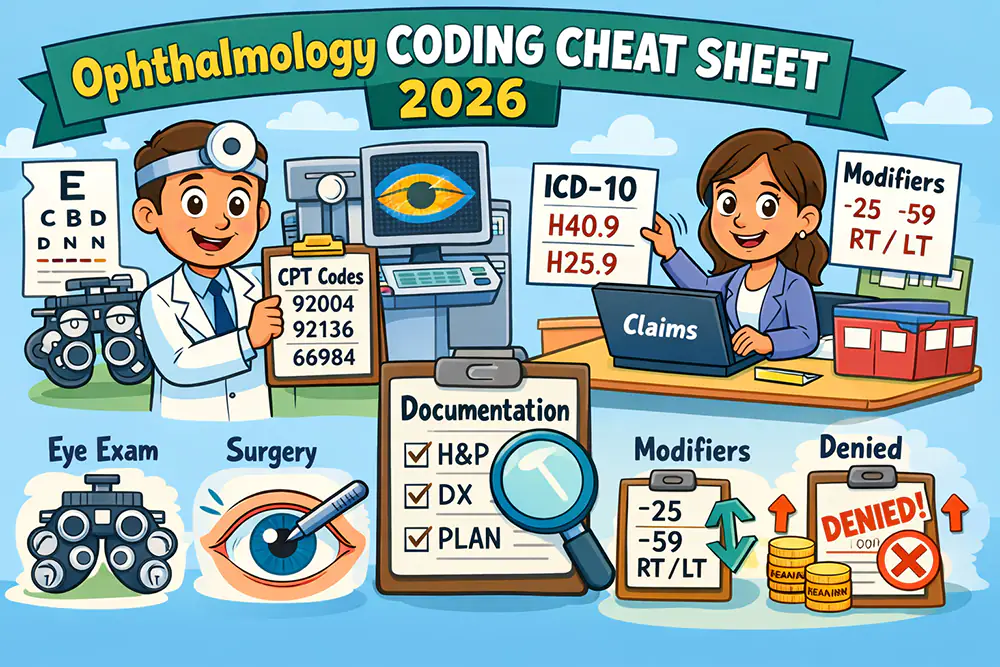
Ophthalmology coding can feel overwhelming for beginners due to the mix of eye-specific CPT codes, general E/M services, and frequent payer-specific rules. Accurate coding is essential not only for compliance but also for maximizing reimbursement and reducing claim denials.
At Solubillix, we specialize in simplifying complex medical billing processes. This 2026 updated ophthalmology coding cheat sheet is designed to help beginners understand the most commonly used codes, billing guidelines, and best practices for error-free claims.
What is Ophthalmology Coding?
Ophthalmology coding involves translating eye care services, procedures, and diagnoses into standardized codes used for insurance billing. These include:
- CPT (Current Procedural Terminology) codes
- ICD-10 diagnosis codes
- HCPCS codes (when applicable)
Correct coding ensures providers are reimbursed properly and helps avoid costly billing errors.
Common Ophthalmology CPT Codes (2026)
Below is a quick-reference cheat sheet of frequently used ophthalmology CPT codes:
Eye Exam Codes
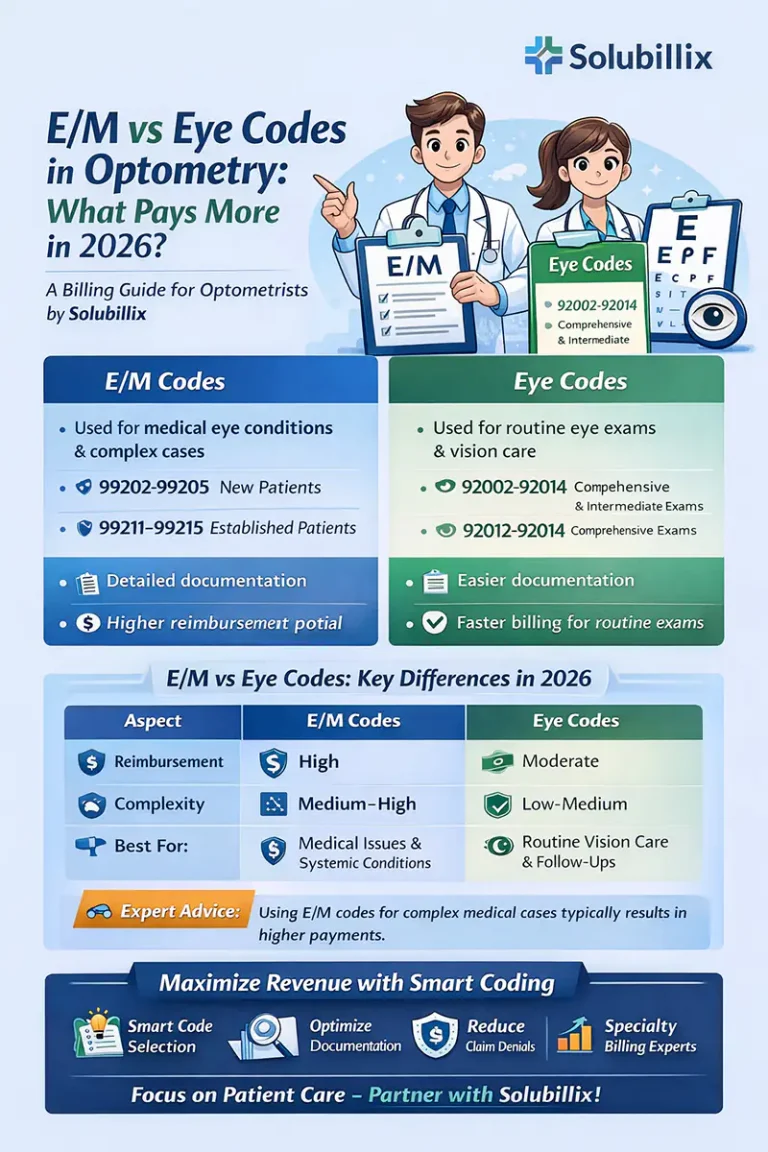
- 92002 – Intermediate eye exam (new patient)
- 92004 – Comprehensive eye exam (new patient)
- 92012 – Intermediate eye exam (established patient)
- 92014 – Comprehensive eye exam (established patient)
👉 Tip: Use these when documentation supports ophthalmologic exam elements rather than general medical decision-making.
E/M Codes (When Applicable)
- 99202–99205 – New patient visits
- 99211–99215 – Established patient visits
👉 Use E/M codes when the visit is more medically focused rather than eye-specific exam structure.
Diagnostic Testing Codes
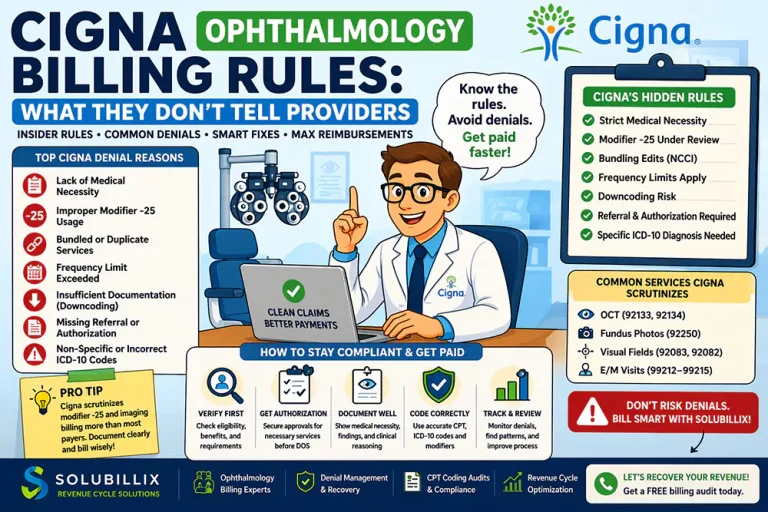
- 92133 – OCT (Optic nerve)
- 92134 – OCT (Retina)
- 92083 – Visual field testing (extended)
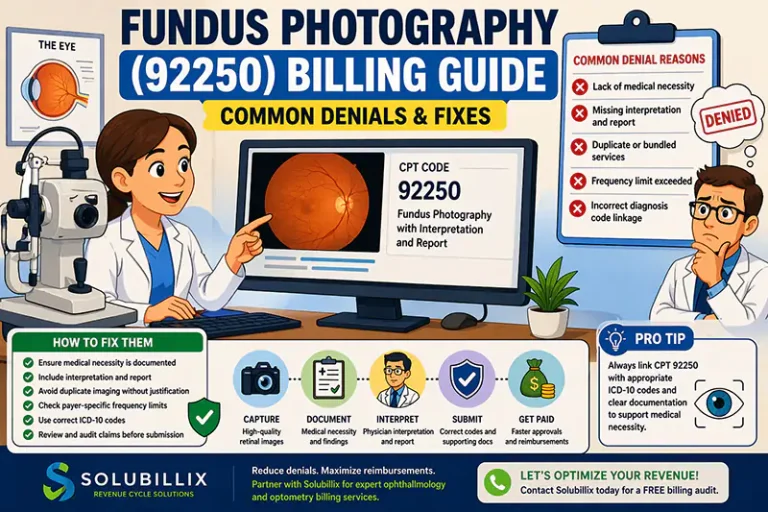
- 92250 – Fundus photography
Minor Procedures
- 67800 – Drainage of eyelid abscess
- 65205 – Removal of foreign body (external eye)
Major Procedures
- 66984 – Cataract surgery with IOL
- 66183 – Glaucoma drainage device
Most Used ICD-10 Codes in Ophthalmology
Accurate diagnosis coding is equally important. Common examples include:
- H52.4 – Presbyopia
- H40.9 – Glaucoma, unspecified
- H25.9 – Age-related cataract, unspecified
- H10.9 – Conjunctivitis, unspecified
👉 Always code to the highest level of specificity when documentation allows.
Key Modifiers in Ophthalmology Billing
Modifiers play a crucial role in preventing denials:
- -25 – Significant, separately identifiable E/M service
- -59 – Distinct procedural service
- -RT / -LT – Right eye / Left eye
- -24 – Unrelated E/M during postoperative period
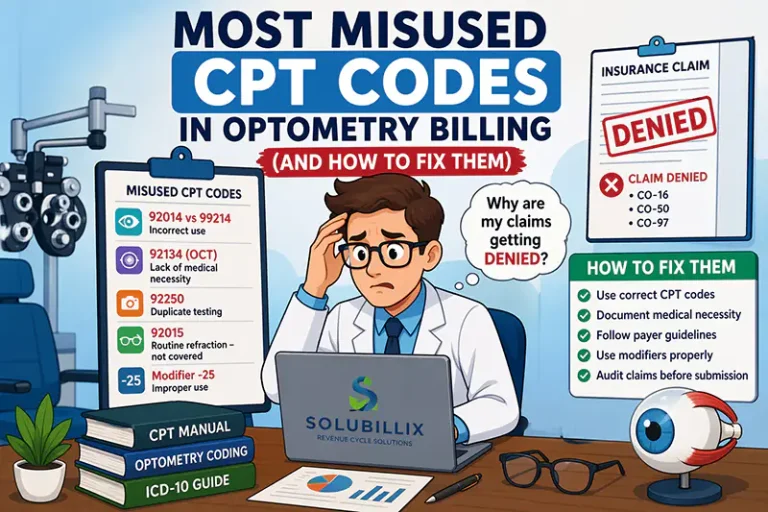
👉 Incorrect modifier usage is one of the top reasons for claim rejections.
Ophthalmology Billing Guidelines (2026 Updates)
1. Choose Between Eye Codes vs E/M Codes
Do not bill both unless clearly justified. Select the code set that best reflects documentation.
2. Documentation is Everything
Ensure charts include:
- Chief complaint
- Exam findings
- Diagnosis
- Medical necessity
3. Verify Medical Necessity
Insurance will deny claims if procedures are not medically necessary—even if coded correctly.
4. Track Global Periods
Surgeries like cataract procedures include postoperative care. Avoid unbundling services.
Common Ophthalmology Coding Mistakes
Avoid these frequent errors:
- Using comprehensive codes without sufficient documentation
- Billing routine vision exams to medical insurance
- Missing modifiers (RT/LT, -25)
- Incorrect linkage between CPT and ICD-10 codes
- Unbundling procedures included in global packages
At Solubillix, we see these issues daily—and help providers fix them quickly.
Pro Tips to Maximize Reimbursement
- Audit charts regularly for coding accuracy
- Stay updated with 2026 CPT changes
- Use payer-specific billing guidelines
- Train staff on documentation best practices
- Consider outsourcing to experts like Solubillix
Why Choose Solubillix for Ophthalmology Billing?
Solubillix provides specialized medical billing services tailored for ophthalmology practices. Our team ensures:
- Reduced claim denials
- Faster reimbursements
- Accurate coding compliance
- End-to-end revenue cycle management
We help practices focus on patient care while we handle the billing complexities.
Conclusion
Ophthalmology coding doesn’t have to be complicated. With the right knowledge, proper documentation, and updated coding practices, beginners can quickly become proficient.
Use this 2026 cheat sheet as your go-to reference, and partner with Solubillix to streamline your billing process and boost revenue.