
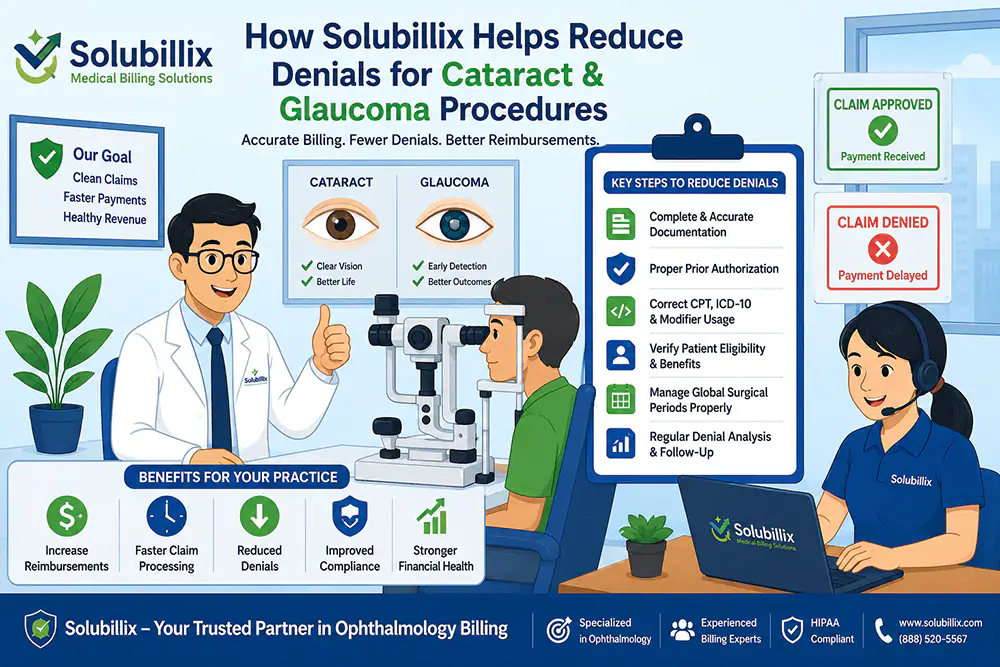
In today’s ophthalmology landscape, claim denials for cataract and glaucoma procedures are becoming increasingly common. Insurance companies are tightening reimbursement policies, increasing documentation reviews, and closely monitoring surgical claims. Even experienced ophthalmology practices can face payment delays due to coding inaccuracies, authorization issues, or incomplete documentation.
At Solubillix, we understand the growing challenges ophthalmology providers face when managing complex billing requirements. Our specialized medical billing solutions are designed to help eye care practices reduce denials, improve reimbursement accuracy, and strengthen overall revenue cycle performance.
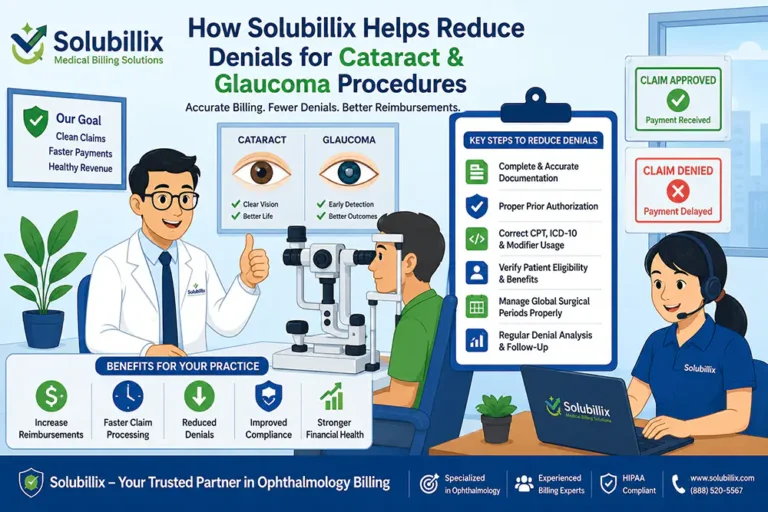
Why Cataract and Glaucoma Claims Are Frequently Denied
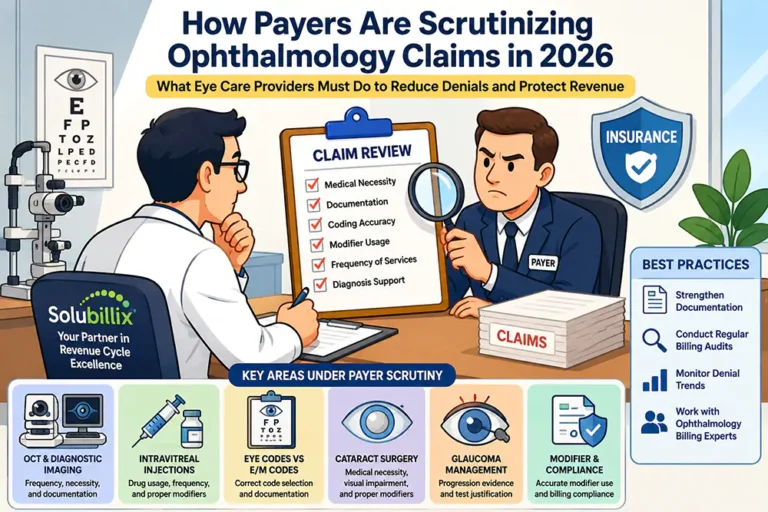
Cataract surgeries and glaucoma-related procedures often involve high-value reimbursements, making them a major focus for payer audits and claim reviews. Insurance carriers expect precise coding, medical necessity validation, and complete documentation before approving payments.
Some of the most common reasons ophthalmology claims get denied include:
- Incomplete clinical documentation
- Incorrect CPT or ICD-10 coding
- Missing prior authorizations
- Modifier misuse
- Errors within global surgical periods
- Insurance eligibility issues
- Missing diagnostic test support
- Incorrect laterality reporting
Without a proactive billing strategy, these issues can create significant financial pressure for ophthalmology practices.
Solubillix Focuses on Accurate Ophthalmology Billing
At Solubillix, our billing specialists work closely with ophthalmology providers to improve clean claim rates and reduce preventable denials.
We help practices strengthen:
- Claim accuracy
- Coding compliance
- Authorization workflows
- Documentation review processes
- Denial management systems
- Revenue cycle efficiency
Our goal is not only to reduce claim rejections but also to help providers maintain consistent cash flow and operational stability.
Proper Documentation Is the Foundation of Successful Claims
One of the leading causes of cataract and glaucoma denials is insufficient medical necessity documentation. Insurance companies require clear clinical evidence supporting the need for procedures and ongoing treatment.
For cataract procedures, providers should document:
- Visual limitations affecting daily activities
- Comprehensive eye examination findings
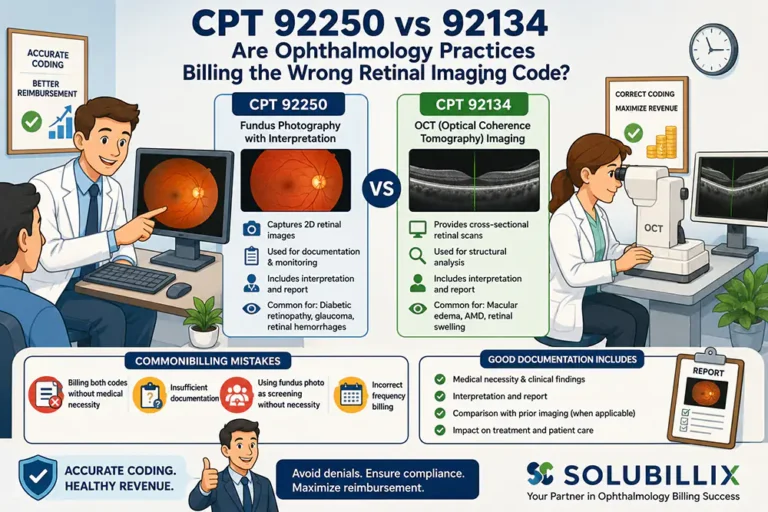
- Diagnostic imaging results
- Failed conservative treatment approaches
- Physician treatment recommendations
For glaucoma-related procedures, payers often review:
- Intraocular pressure history
- Visual field testing
- Medication management history
- Optic nerve assessments
- Disease progression documentation
At Solubillix, we help providers identify documentation gaps before claims are submitted, reducing the likelihood of payer denials and reimbursement delays.
Prior Authorization Management Is Essential
Many glaucoma procedures and advanced ophthalmic treatments require prior authorization approval before services are performed. Missing or inaccurate authorization details frequently lead to denied claims.
Our team at Solubillix helps practices:
- Verify payer authorization requirements
- Track authorization status
- Prevent scheduling-related authorization errors
- Maintain proper authorization documentation
- Reduce avoidable authorization denials
Efficient authorization management plays a major role in protecting ophthalmology revenue cycles.
Correct Modifier Usage Prevents Costly Billing Errors
Modifier misuse continues to be one of the biggest challenges in ophthalmology billing. Cataract surgeries and glaucoma procedures often involve complex coding scenarios that require specialty-specific billing knowledge.
Incorrect use of modifiers such as:
- Modifier 24
- Modifier 25
- Modifier 57
- Modifier 59
can trigger denials, underpayments, or payer audits.
At Solubillix, our ophthalmology billing professionals carefully review coding and modifier usage to ensure compliance with payer guidelines and reduce reimbursement risk.
Eligibility Verification Helps Reduce Front-End Denials
Insurance eligibility errors can create avoidable claim rejections before the billing process even begins.
Our eligibility verification process helps ophthalmology practices:
- Confirm active patient coverage
- Identify referral requirements
- Review procedure benefits
- Verify authorization needs
- Determine patient financial responsibility
By improving front-end verification accuracy, practices can significantly increase first-pass claim acceptance rates.
Managing Global Surgical Periods Correctly
Global surgical period billing errors remain a major concern for cataract procedures. Billing unrelated services improperly during the post-operative period can create recurring denials and compliance risks.
At Solubillix, we help providers manage:
- Global surgical timelines
- Post-operative billing rules
- Appropriate modifier application
- Documentation support for unrelated services
This helps reduce claim disputes while improving reimbursement consistency.
Why Ophthalmology Practices Choose Solubillix
Ophthalmology billing requires more than general medical billing knowledge. Specialty procedures, surgical coding complexities, and payer-specific policies demand a focused and experienced billing approach.
Providers choose Solubillix because we offer:
- Specialty-focused ophthalmology billing support
- Denial management expertise
- Revenue cycle optimization
- Accurate coding review
- Faster claim processing
- Customized billing solutions for eye care practices
Our team is committed to helping providers reduce administrative burden while improving financial performance.
Final Thoughts
As payer scrutiny continues to increase, ophthalmology practices must take proactive steps to reduce denials for cataract and glaucoma procedures. Strong documentation, accurate coding, proper authorization management, and specialty-focused billing support are essential for maintaining healthy reimbursements.Solubillix helps ophthalmology providers streamline billing operations, strengthen compliance, and improve revenue cycle outcomes through reliable and customized medical billing solutions tailored to specialty practices.