
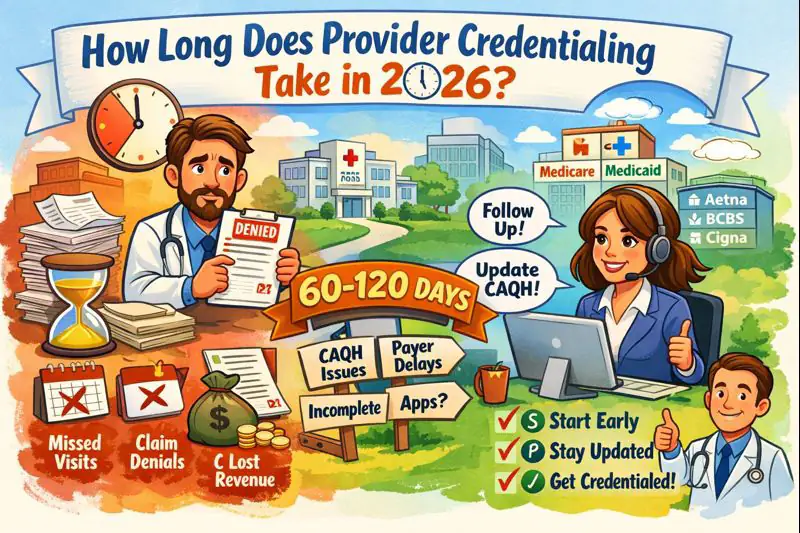
Provider credentialing continues to be one of the most important—and time-sensitive—processes for healthcare practices in 2026. Delays in credentialing can impact provider onboarding, claim submission, and overall revenue flow. Despite advancements in payer portals and automation, credentialing timelines still depend on several factors.
So, how long does provider credentialing take in 2026? Let’s explore.
Average Provider Credentialing Timeline in 2026
In 2026, the average provider credentialing timeline ranges from 60 to 120 days, depending on the insurance payer and provider specialty.
Typical Credentialing Time by Payer
- Medicare: 45–90 days
- Medicaid: 60–120 days (state-specific)
- Commercial Insurance (BCBS, Aetna, UnitedHealthcare, Cigna): 60–120 days
- Hospital Privileging: 90–180 days
Even though some payers advertise faster processing, real-world timelines often extend due to verification delays and follow-ups.
Key Factors That Impact Credentialing Time in 2026
Several elements continue to affect how quickly a provider becomes credentialed:
1. Application Accuracy
Errors, missing documents, or outdated provider information are the most common reasons for credentialing delays.
2. CAQH Profile Management
Most commercial payers still rely on CAQH in 2026. Unattested or incomplete CAQH profiles can put the entire process on hold.
3. Payer Processing Volume
High enrollment demand—especially for behavioral health and telehealth providers—often results in payer backlogs.
4. State and Payer Regulations
Medicaid timelines vary widely by state, and some commercial payers apply additional verification steps.
5. Provider Specialty
Mental health providers, specialists, and multi-state telehealth clinicians often experience longer processing times.
Has Provider Credentialing Improved in 2026?
While payer technology has improved document uploads and tracking, credentialing is still largely manual behind the scenes. Verification of education, licenses, employment history, sanctions, and malpractice coverage remains standard.
Practices that submit clean applications and consistently follow up with payers can reduce credentialing delays by 30–40%.
How SoluBillix Helps Speed Up Provider Credentialing
SoluBillix is a trusted medical billing and credentialing partner that helps healthcare practices reduce credentialing delays and avoid costly enrollment mistakes.
How SoluBillix Supports Your Practice
- End-to-end provider credentialing and re-credentialing
- CAQH setup, updates, and monthly attestations
- Payer enrollment with Medicare, Medicaid, and commercial plans
- Active payer follow-ups and status tracking
- Error correction and resubmissions to prevent rejections
- Seamless coordination between credentialing and billing teams
By partnering with SoluBillix, practices can ensure providers are enrolled correctly and faster—allowing claims to be submitted without unnecessary denials or revenue interruptions.
Why Credentialing Delays Hurt Revenue
Each uncredentialed provider can lead to:
- Missed or delayed billable visits
- Claim denials for non-credentialed providers
- Cash-flow disruptions
- Patient scheduling limitations
In 2026, efficient credentialing is no longer optional—it’s a core revenue protection strategy.
Final Thoughts
So, how long does provider credentialing take in 2026?
While the standard timeline remains 60 to 120 days, working with an experienced partner like SoluBillix can significantly shorten the process and prevent costly delays.
Credentialing is more than paperwork—it directly impacts your practice’s growth, compliance, and financial stability.