
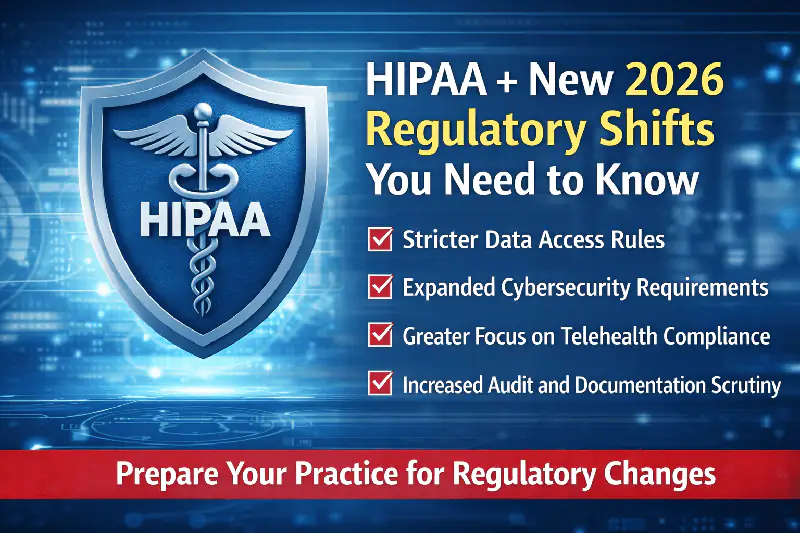
Healthcare compliance is evolving rapidly. As we move into 2026, HIPAA enforcement is becoming stricter, and new regulatory shifts are reshaping how providers, billing companies, and healthcare organizations handle patient data, documentation, cybersecurity, and revenue cycle operations.
Failure to stay compliant no longer just risks fines—it can lead to payer audits, claim denials, reputational damage, and operational shutdowns.
This guide breaks down the key HIPAA requirements and the most important 2026 regulatory shifts every healthcare organization must understand—and how to stay ahead.
Why HIPAA Compliance Still Matters in 2026
HIPAA is not outdated—it’s expanding.
Regulators are now focusing on:
- Data security in digital and cloud-based systems
- Third-party vendor compliance
- Patient access to electronic health information
- Breach response timelines and transparency
With increased telehealth, EHR usage, and outsourced billing, HIPAA exposure has never been higher.
Key HIPAA Updates & Enforcement Trends Heading into 2026
While HIPAA’s core Privacy and Security Rules remain intact, enforcement priorities and expectations are shifting.
🔐 Stronger Focus on Cybersecurity Controls
Healthcare organizations are expected to:
- Implement advanced access controls
- Encrypt patient data at rest and in transit
- Monitor system access logs proactively
Organizations without documented cybersecurity safeguards are now high-risk audit targets.
📂 Expanded Responsibility for Business Associates
Billing companies, IT vendors, cloud providers, and RCM partners are under greater scrutiny.
In 2026:
- Covered entities are liable for vendor non-compliance
- Business Associate Agreements (BAAs) must be updated and enforced
- Due diligence documentation is expected during audits
Outsourcing does not eliminate compliance responsibility.
New 2026 Regulatory Shifts You Must Prepare For
1. Stricter Patient Data Access Requirements
Regulators are reinforcing patients’ rights to:
- Faster access to electronic medical records
- Transparent data-sharing practices
- Clear explanations of data usage
Delays or barriers in patient access can now trigger penalties and investigations.
What to do:
- Streamline patient record request workflows
- Train staff on access timelines
- Maintain audit trails for data requests
2. Increased Audits Focused on Documentation Integrity
Auditors are increasingly linking HIPAA compliance with documentation accuracy.
Key risk areas:
- Incomplete or inconsistent records
- Poor documentation controls
- Inadequate version tracking in EHRs
Documentation errors now raise both billing and privacy concerns.
3. Greater Oversight of Telehealth & Remote Services
Telehealth expansion has triggered new compliance expectations:
- Secure communication platforms
- Proper consent documentation
- Verified provider credentials
Improper telehealth documentation or unsecured platforms can result in HIPAA violations and claim denials.
4. Mandatory Breach Response Preparedness
In 2026, regulators expect organizations to:
- Have a documented breach response plan
- Conduct routine risk assessments
- Report breaches within required timelines
Failure to demonstrate preparedness—even without a breach—can still result in penalties.
5. Alignment Between HIPAA, Billing Compliance & RCM
HIPAA compliance is no longer isolated. It now intersects with:
- Coding accuracy
- Claims submission integrity
- Audit readiness
Regulators increasingly view billing errors, documentation gaps, and data mishandling as connected risks.
How These Changes Impact Medical Billing & Revenue Cycle Management
Non-compliance doesn’t just lead to fines—it directly affects revenue.
Potential consequences include:
- Claim rejections due to documentation gaps
- Increased payer audits
- Contract terminations
- Loss of patient trust
Strong HIPAA compliance now plays a direct role in clean claims and predictable cash flow.
Best Practices to Stay HIPAA-Compliant in 2026
✔ Conduct annual risk assessments
✔ Update privacy and security policies
✔ Train staff regularly on compliance changes
✔ Review vendor and billing partner compliance
✔ Monitor documentation and access controls
✔ Prepare for audits before they happen
Why Solubillix?
At Solubillix, compliance is built into everything we do.
We don’t just process claims—we protect your practice.
How Solubillix Helps You Stay Compliant in 2026:
✔ HIPAA-Compliant Billing Operations
Our workflows align with privacy, security, and payer compliance standards.
✔ Documentation & Coding Integrity Reviews
We ensure your documentation supports billing while meeting audit and privacy expectations.
✔ Vendor & RCM Risk Reduction
We operate as a fully compliant billing partner, reducing your third-party risk exposure.
✔ Audit-Ready Processes
From record handling to claims submission, our systems are designed to withstand payer and regulatory audits.
✔ Future-Focused Compliance Expertise
We stay ahead of regulatory changes so you don’t have to.
Final Thoughts
HIPAA compliance in 2026 is no longer optional or reactive—it’s strategic.
Healthcare organizations that proactively adapt to new regulatory shifts will:
- Reduce audit risk
- Protect patient trust
- Improve revenue stability
- Strengthen long-term growth
Partnering with a compliance-driven billing company like Solubillix ensures your practice is prepared—not pressured—by regulatory change.