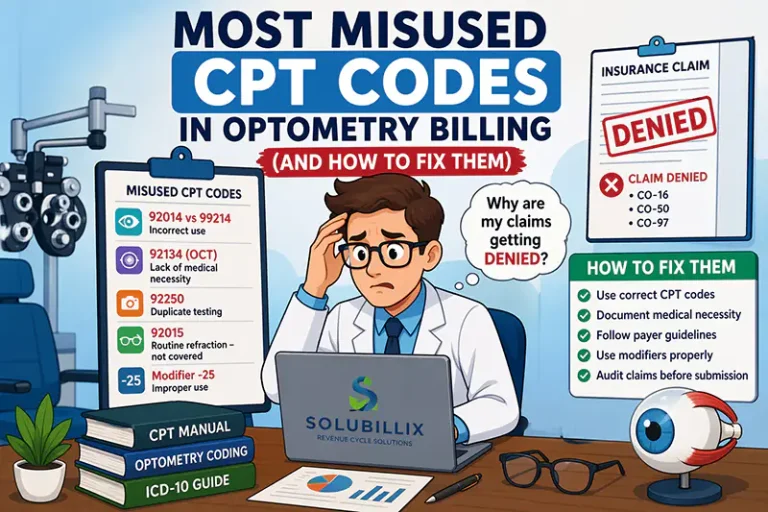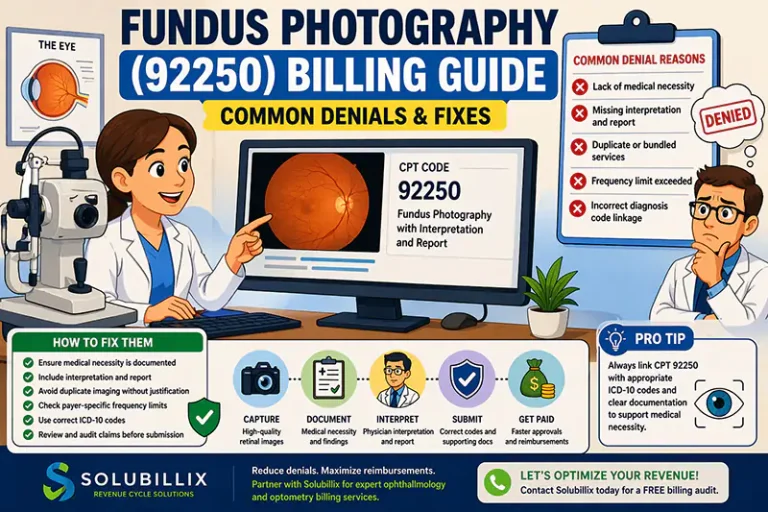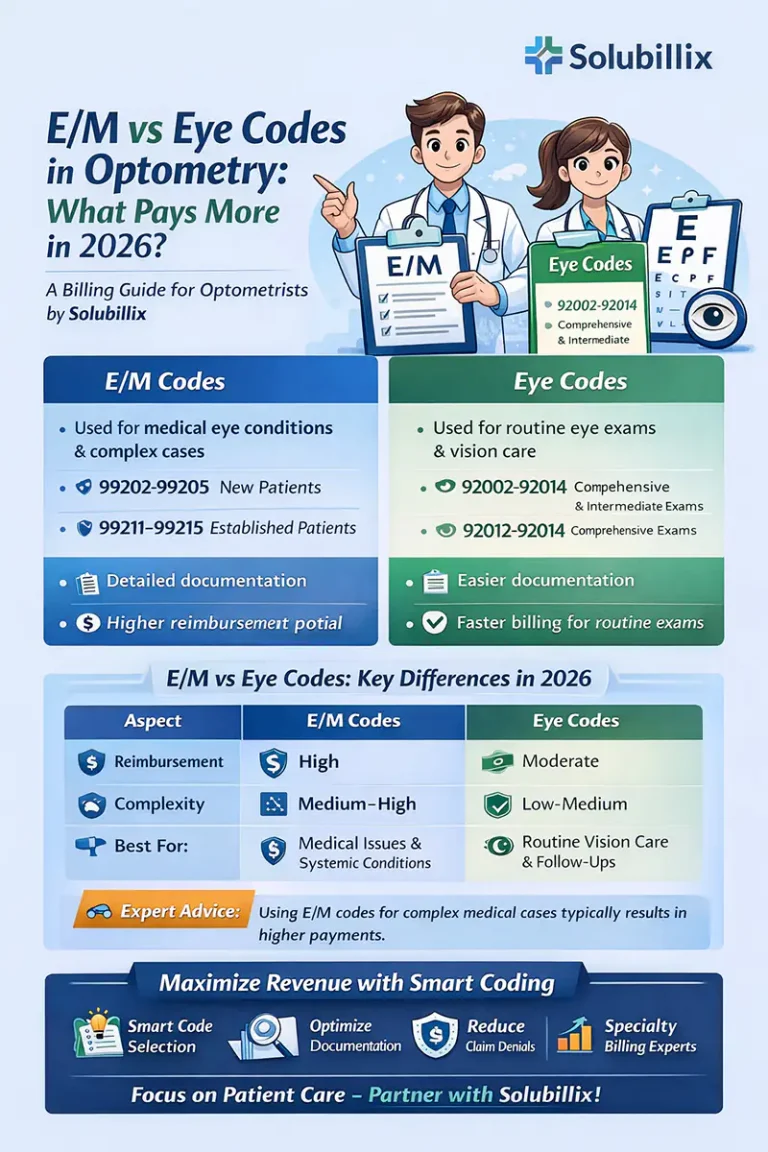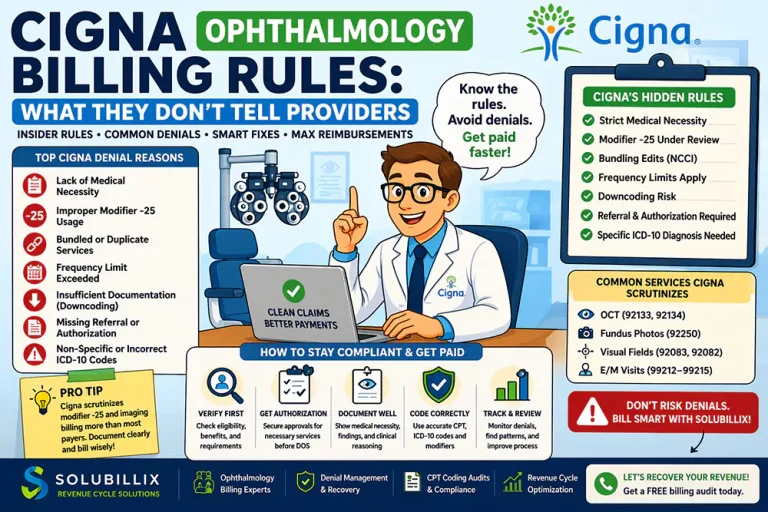


Authorization denials are one of the most common and costly challenges in ophthalmology billing. Even when services are medically necessary, claims can be denied simply because proper authorization was not obtained or documented correctly.
At Solubillix, we help ophthalmology practices reduce denial rates and recover lost revenue. This step-by-step guide explains why authorization denials happen and how to fix them efficiently in 2026.
What is an Authorization Denial?
An authorization denial occurs when an insurance payer refuses to reimburse a claim because prior approval (authorization) was not obtained before performing the service.
This is especially common for:
- Diagnostic procedures
- Surgeries (e.g., cataract procedures)
- High-cost imaging (OCT, visual fields)
Common Reasons for Authorization Denials in Ophthalmology
Understanding the root cause is the first step to fixing the issue.
1. No Authorization Obtained
The most frequent issue—services were performed without prior approval.
2. Expired Authorization
Authorization was approved, but the service was performed outside the valid date range.
3. Incorrect CPT Code Submitted
Authorization was obtained for one procedure, but a different CPT code was billed.
4. Mismatch in Diagnosis (ICD-10)
The diagnosis submitted does not match what was approved.
5. Out-of-Network Provider Issues
Authorization may not apply if the provider is out-of-network.
Step-by-Step Fix Guide for Authorization Denials
Step 1: Review the Denial Reason Carefully
Start by checking the Explanation of Benefits (EOB) or denial code to identify the exact issue.
👉 Look for keywords like:
- “Authorization required”
- “No prior approval”
- “Invalid authorization”
Step 2: Verify Authorization Status
Check:
- Was authorization obtained?
- Is it still valid?
- Does it match the billed CPT and diagnosis?
If authorization exists but was not linked correctly, this can often be fixed quickly.
Step 3: Correct and Resubmit the Claim
If errors are found:
- Update CPT/ICD-10 codes to match authorization
- Add authorization number in the correct field
- Ensure provider details match
👉 Then resubmit as a corrected claim.
Step 4: Request Retro Authorization (If Applicable)
Some payers allow retro authorization in limited cases such as:
- Emergency situations
- System errors
- First-time exceptions
👉 Contact the payer immediately and submit supporting documentation.
Step 5: File an Appeal
If retro authorization is denied, submit a formal appeal including:
- Medical necessity documentation
- Provider notes
- Explanation letter
At Solubillix, we recommend submitting appeals within payer timelines to avoid automatic rejection.
Step 6: Track and Follow Up
Authorization-related appeals require consistent follow-up:
- Check claim status weekly
- Document all communication
- Escalate if needed
Preventing Authorization Denials (Best Practices)
Prevention is always better than rework. Here’s how to avoid denials:
✔ Verify Authorization Before Service
Always confirm authorization requirements before scheduling procedures.
✔ Use a Checklist System
Create a workflow to ensure:
- CPT codes match authorization
- Diagnosis is accurate
- Valid dates are confirmed
✔ Train Front Desk and Billing Teams
Authorization errors often start at scheduling—train staff thoroughly.
✔ Maintain Updated Payer Guidelines
Each insurance has different rules. Stay updated to avoid surprises.
✔ Use Billing Experts Like Solubillix
Outsourcing to professionals reduces errors and improves cash flow.
Real-World Example
A patient undergoes OCT testing, but authorization was obtained for a different CPT code. The claim gets denied.
✔ Fix:
- Verify approved CPT code
- Correct billing code
- Resubmit with proper authorization details
Result: Claim gets paid without needing an appeal.
Impact of Authorization Denials on Revenue
Authorization denials can lead to:
- Delayed payments
- Increased administrative workload
- Revenue loss if not corrected on time
Reducing these denials directly improves your practice’s financial performance.
Why Choose Solubillix?
Solubillix specializes in ophthalmology billing and denial management. We help practices:
- Reduce authorization-related denials
- Improve claim acceptance rates
- Handle appeals and follow-ups
- Optimize revenue cycle management
Our goal is simple: maximize your revenue while minimizing billing stress.
Conclusion
Authorization denials in ophthalmology are preventable with the right processes, training, and attention to detail. By following this step-by-step fix guide, practices can recover lost revenue and avoid future issues.
Partnering with Solubillix ensures your billing process remains accurate, compliant, and profitable.