
Everything Optometry Practices Need to Know in 2026
Credentialing and insurance enrollment are among the most important — yet most overlooked — parts of running a successful optometry practice. Even highly skilled optometrists can experience delayed reimbursements, denied claims, and cash flow disruptions if credentialing is incomplete or improperly managed.
In 2026, insurance companies are applying stricter provider verification processes, increased documentation requirements, and tighter enrollment regulations for optometry providers. As a result, practices must ensure every credentialing step is handled accurately and efficiently.
At Solubillix, we help optometrists and eye care practices streamline credentialing, insurance enrollment, payer contracting, and revenue cycle management to minimize delays and maximize reimbursement opportunities.
This guide explains how optometry credentialing works, common enrollment challenges, and how practices can avoid costly delays.
What Is Optometry Credentialing?
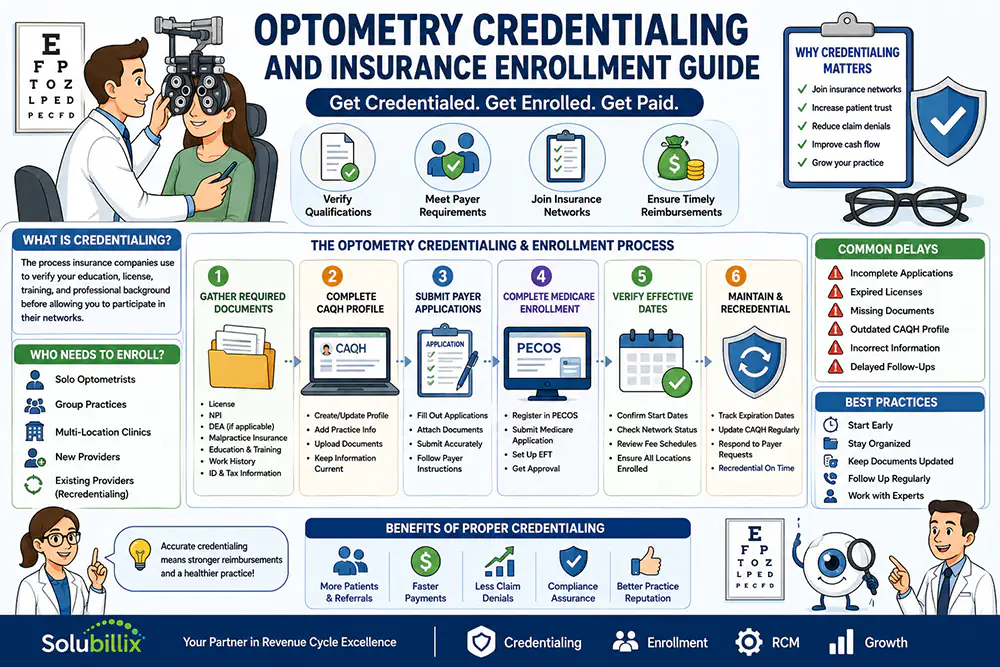
Optometry credentialing is the process insurance companies use to verify a provider’s qualifications, education, licensure, training, work history, and professional background before allowing participation in their network.
Credentialing helps payers confirm that an optometrist meets all requirements to provide healthcare services to insured patients.
The process typically includes verification of:
- State optometry license
- NPI registration
- DEA registration (if applicable)
- Malpractice insurance
- Education and training
- Work history
- Board certifications
- CAQH profile
- Professional references
- Practice location information
Without proper credentialing, insurance companies may deny claims or refuse provider participation.
What Is Insurance Enrollment?
Insurance enrollment occurs after credentialing approval and allows providers to officially participate with insurance carriers for claim reimbursement.
Enrollment determines:
- Effective participation dates
- Reimbursement eligibility
- Network status
- Contract terms
- Fee schedules
Even if an optometrist is credentialed, claims may still deny if enrollment is incomplete.
Why Credentialing Is Critical for Optometry Practices
Credentialing directly impacts a practice’s financial performance and patient access.
Without proper enrollment, practices may experience:
- Delayed reimbursements
- Out-of-network claim denials
- Reduced patient volume
- Payment interruptions
- Revenue loss
- Credentialing backlogs
Because many patients rely heavily on vision and medical insurance plans, participation with major payers is essential for practice growth.
Common Insurance Plans for Optometry Enrollment
Optometry practices commonly enroll with:
- Medicare
- Medicaid
- Commercial medical insurance plans
- Vision insurance networks
- Managed care organizations
- Workers’ compensation plans
Each payer has different credentialing rules, timelines, and documentation requirements.
Key Steps in the Optometry Credentialing Process
1. Obtain Required Provider Documentation
Before starting enrollment, practices should gather:
- State license copies
- NPI confirmation
- DEA certificate (if applicable)
- Malpractice insurance certificate
- Resume or CV
- Education certificates
- Board certifications
- Government-issued identification
- W-9 forms
- Practice tax ID information
Missing documents are one of the leading causes of credentialing delays.
2. Complete CAQH Profile Setup
The Council for Affordable Quality Healthcare (CAQH) serves as a centralized provider database used by many insurance companies.
Providers must ensure their CAQH profile includes:
- Updated work history
- Current licenses
- Practice addresses
- Liability coverage
- Hospital affiliations
- Supporting documents
Outdated CAQH information can delay payer approvals for months.
3. Submit Payer Enrollment Applications
Each insurance company requires separate enrollment applications.
Applications may include:
- Provider demographic forms
- Group affiliation documents
- EFT enrollment forms
- W-9 submissions
- Credentialing questionnaires
Accuracy is critical because even small errors may result in application rejection.
4. Complete Medicare Enrollment Properly
Medicare enrollment remains one of the most important steps for optometry providers.
Providers must complete:
- PECOS registration
- Medicare application submission
- EFT setup
- Reassignment forms (if joining a group)
Incorrect Medicare enrollment may lead to:
- Claim rejections
- Delayed effective dates
- Payment holds
5. Verify Payer Effective Dates
Many practices assume they can bill immediately after application submission, but reimbursement usually depends on official participation approval.
Practices should always verify:
- Effective dates
- Network participation status
- Group affiliations
- Contract activation
- Fee schedules
Billing before enrollment activation may result in denied claims.
Common Credentialing Delays in Optometry
Credentialing delays are extremely common in eye care practices.
Frequent Causes Include
- Incomplete applications
- Expired licenses
- Missing signatures
- Outdated CAQH profiles
- Incorrect tax information
- Address inconsistencies
- Delayed payer responses
- Missing malpractice coverage
Even small clerical errors can extend enrollment timelines significantly.
How Long Does Optometry Credentialing Take?
Credentialing timelines vary by payer.
Average timelines include:
- Medicare: 60–120 days
- Commercial payers: 90–180 days
- Medicaid: 60–150 days
- Vision plans: 30–90 days
Some insurance companies may take longer depending on application volume and provider verification requirements.
Practices opening new locations should begin credentialing several months before seeing patients.
Recredentialing Is Equally Important
Credentialing is not a one-time process.
Most insurance carriers require periodic recredentialing every:
- 2 years
- 3 years
- Or according to payer policy
Failure to complete recredentialing may lead to:
- Network termination
- Claim denials
- Payment interruptions
Practices should actively monitor recredentialing deadlines.
Group Credentialing vs Individual Credentialing
Optometrists working within group practices often require:
- Individual provider credentialing
- Group enrollment
- Tax ID linkage
- Provider reassignment forms
Both the individual provider and practice entity must often be approved before billing can begin.
Credentialing Challenges for Multi-Location Practices
Large optometry organizations and multi-location clinics face additional complexity because payers may require:
- Separate location enrollment
- Site-specific credentialing
- Multiple taxonomies
- Location-based billing approvals
Failure to enroll all practice locations properly can create reimbursement issues.
Why Accurate Credentialing Protects Revenue
Credentialing directly affects:
- Revenue cycle performance
- Patient scheduling
- Insurance eligibility
- Reimbursement speed
- Claim acceptance rates
Practices with weak credentialing workflows often experience:
- Increased AR days
- Higher denial rates
- Cash flow disruptions
- Patient dissatisfaction
Strong enrollment management supports long-term operational stability.
Best Practices for Successful Optometry Credentialing
Keep Provider Information Updated
Practices should regularly update:
- Licenses
- Malpractice coverage
- Practice addresses
- CAQH profiles
- Contact information
- Tax records
Consistency across all records is critical.
Track Enrollment Applications Carefully
Monitoring application status helps identify:
- Missing documents
- Delayed approvals
- Payer requests
- Enrollment rejections
Following up consistently reduces approval delays.
Maintain Organized Credentialing Records
Practices should store:
- Approval letters
- Contracts
- Effective dates
- Recredentialing timelines
- Payer communications
Strong organization prevents future billing issues.
Partner With Credentialing Specialists
Credentialing errors can significantly delay revenue generation for optometry practices.
At Solubillix, we help optometry providers simplify credentialing, payer enrollment, recredentialing, and insurance participation management through efficient, compliance-focused workflows designed to reduce delays and improve reimbursement readiness.
Our services support:
- Medicare enrollment
- Commercial payer credentialing
- Vision plan enrollment
- CAQH management
- Group practice enrollment
- Recredentialing management
- Provider onboarding
Final Thoughts
Optometry credentialing and insurance enrollment have become increasingly detailed in 2026 as payers strengthen provider verification and compliance standards.
Practices that fail to manage credentialing properly may experience:
- Delayed reimbursements
- Insurance claim denials
- Revenue interruptions
- Network participation problems
- Reduced patient access
However, practices that maintain organized credentialing systems, accurate enrollment records, and proactive payer communication can improve financial performance while reducing administrative stress.
Successful optometry practices understand that credentialing is not just paperwork — it is a critical part of maintaining steady revenue and long-term practice growth.
That is why many eye care providers trust Solubillix for professional credentialing, insurance enrollment, and revenue cycle management support tailored specifically for optometry practices.