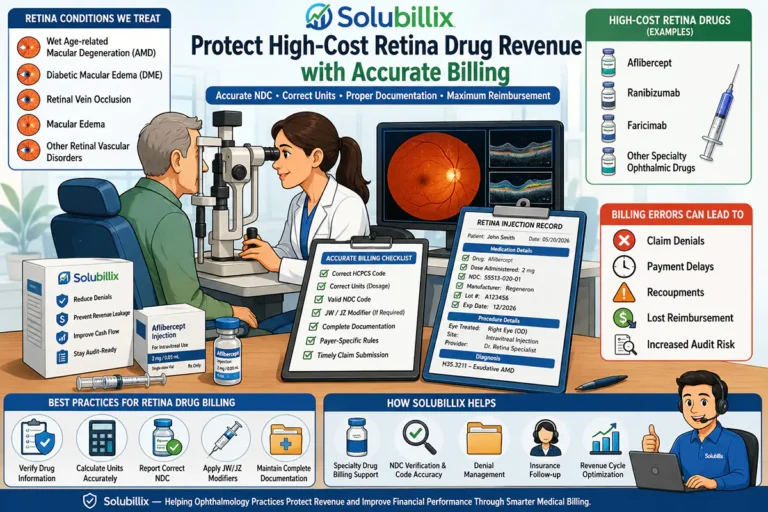
Intravitreal injections (CPT 67028) are a major revenue driver for retina and ophthalmology practices. But how you source and bill the drug can dramatically impact your cash flow, denial rates, and overall profitability.
The big question providers ask us at Solubillix is:
👉 Should we use Buy-and-Bill or Specialty Pharmacy?
The answer isn’t one-size-fits-all. Let’s break it down clearly.
💡 What is Buy-and-Bill?
Buy-and-Bill means the practice:
- Purchases the drug upfront
- Stores and administers it in-office
- Bills insurance for both:
- Procedure (67028)
- Drug (J-code)
💊 Common drugs used:
- Aflibercept
- Ranibizumab
- Faricimab
- Bevacizumab
✅ Pros of Buy-and-Bill
💰 Higher Revenue Potential
- Practices can earn margin on the drug reimbursement
- Especially profitable with high-cost biologics
⚡ Faster Treatment
- Drug is available same day
- No delays waiting for pharmacy shipment
🎯 Better Control
- You control:
- Inventory
- Scheduling
- Patient flow
❌ Cons of Buy-and-Bill
💸 High Upfront Cost
- Expensive drugs = major cash investment
⚠️ Denial Risk
- Incorrect:
- J-codes
- Units
- NDC
→ Leads to costly denials
📉 Reimbursement Variability
- Payers may reimburse below acquisition cost
💡 What is Specialty Pharmacy?
Specialty Pharmacy means:
- Drug is ordered per patient
- Pharmacy ships it to the clinic
- Pharmacy bills the drug
- Provider bills only 67028
✅ Pros of Specialty Pharmacy
💵 No Upfront Cost
- No need to purchase expensive drugs
🛡️ Lower Financial Risk
- No risk of:
- Drug wastage
- Underpayment
📦 Simplified Inventory
- No storage or inventory management
❌ Cons of Specialty Pharmacy
⏳ Treatment Delays
- Waiting for drug delivery can delay care
📉 Lower Revenue
- Practice loses drug margin
🔄 Coordination Issues
- More back-and-forth between:
- Pharmacy
- Insurance
- Clinic
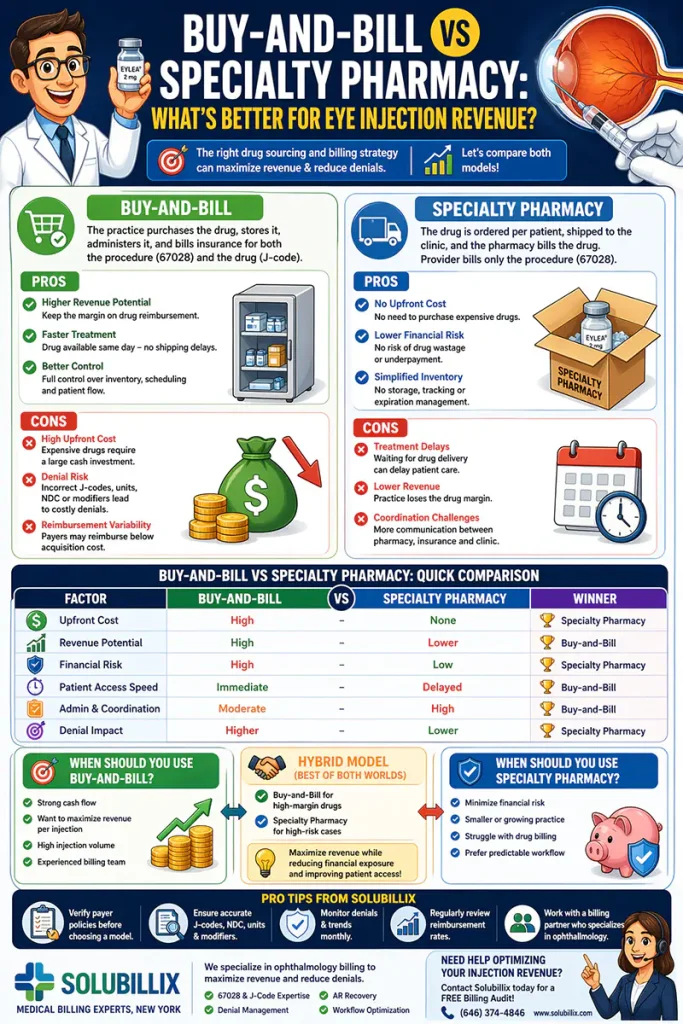
⚖️ Buy-and-Bill vs Specialty Pharmacy (Quick Comparison)
| Factor | Buy-and-Bill | Specialty Pharmacy |
| Upfront Cost | High | None |
| Revenue Potential | High | Lower |
| Cash Flow Risk | High | Low |
| Denial Impact | High | Lower |
| Patient Access Speed | Immediate | Delayed |
| Admin Work | Moderate | High coordination |
🚨 What Most Practices Get Wrong
At Solubillix, we often see:
❌ Billing errors in Buy-and-Bill:
- Wrong J-code
- Missing JW modifier
- Units mismatch
❌ Workflow gaps in Specialty Pharmacy:
- Missing prior authorization
- Shipment delays
- Unbilled injections
👉 Both models fail without strong billing workflows
🧠 When Should You Use Buy-and-Bill?
Best for practices that:
- Have strong cash flow
- Want to maximize revenue per injection
- Perform high injection volume
- Have experienced billing teams
🧠 When Should You Use Specialty Pharmacy?
Best for practices that:
- Want to minimize financial risk
- Are smaller or growing
- Struggle with drug billing
- Prefer predictable workflows
💡 Hybrid Model (Best of Both Worlds)
Many successful retina practices use:
👉 Buy-and-Bill for high-margin drugs
👉 Specialty Pharmacy for high-risk cases
This approach:
- Maximizes revenue
- Reduces financial exposure
- Improves patient access
🚀 How Solubillix Helps Optimize Injection Revenue
At Solubillix, we specialize in:
- Intravitreal injection billing (67028)
- J-code accuracy & compliance
- Denial management & AR recovery
- Workflow optimization for both models
📈 Our clients achieve:
- Reduced denials
- Faster reimbursements
- Higher revenue per injection
📞 Final Verdict: Which is Better?
👉 Buy-and-Bill = Higher profit, higher risk
👉 Specialty Pharmacy = Lower risk, lower revenue
The best choice depends on your:
- Cash flow
- Volume
- Billing strength
💬 Need Help Deciding?
If your practice is unsure which model to use—or struggling with:
- Injection denials
- Drug underpayments
- Billing inefficiencies
👉 Solubillix can help you optimize both models.
Contact us today for a free billing audit.Intravitreal injections (CPT 67028) are a major revenue driver for retina and ophthalmology practices. But how you source and bill the drug can dramatically impact your cash flow, denial rates, and overall profitability.
The big question providers ask us at Solubillix is:
👉 Should we use Buy-and-Bill or Specialty Pharmacy?
The answer isn’t one-size-fits-all. Let’s break it down clearly.
💡 What is Buy-and-Bill?
Buy-and-Bill means the practice:
- Purchases the drug upfront
- Stores and administers it in-office
- Bills insurance for both:
- Procedure (67028)
- Drug (J-code)
💊 Common drugs used:
- Aflibercept
- Ranibizumab
- Faricimab
- Bevacizumab
✅ Pros of Buy-and-Bill
💰 Higher Revenue Potential
- Practices can earn margin on the drug reimbursement
- Especially profitable with high-cost biologics
⚡ Faster Treatment
- Drug is available same day
- No delays waiting for pharmacy shipment
🎯 Better Control
- You control:
- Inventory
- Scheduling
- Patient flow
❌ Cons of Buy-and-Bill
💸 High Upfront Cost
- Expensive drugs = major cash investment
⚠️ Denial Risk
- Incorrect:
- J-codes
- Units
- NDC
→ Leads to costly denials
📉 Reimbursement Variability
- Payers may reimburse below acquisition cost
💡 What is Specialty Pharmacy?
Specialty Pharmacy means:
- Drug is ordered per patient
- Pharmacy ships it to the clinic
- Pharmacy bills the drug
- Provider bills only 67028
✅ Pros of Specialty Pharmacy
💵 No Upfront Cost
- No need to purchase expensive drugs
🛡️ Lower Financial Risk
- No risk of:
- Drug wastage
- Underpayment
📦 Simplified Inventory
- No storage or inventory management
❌ Cons of Specialty Pharmacy
⏳ Treatment Delays
- Waiting for drug delivery can delay care
📉 Lower Revenue
- Practice loses drug margin
🔄 Coordination Issues
- More back-and-forth between:
- Pharmacy
- Insurance
- Clinic
⚖️ Buy-and-Bill vs Specialty Pharmacy (Quick Comparison)
| Factor | Buy-and-Bill | Specialty Pharmacy |
| Upfront Cost | High | None |
| Revenue Potential | High | Lower |
| Cash Flow Risk | High | Low |
| Denial Impact | High | Lower |
| Patient Access Speed | Immediate | Delayed |
| Admin Work | Moderate | High coordination |
🚨 What Most Practices Get Wrong
At Solubillix, we often see:
❌ Billing errors in Buy-and-Bill:
- Wrong J-code
- Missing JW modifier
- Units mismatch
❌ Workflow gaps in Specialty Pharmacy:
- Missing prior authorization
- Shipment delays
- Unbilled injections
👉 Both models fail without strong billing workflows
🧠 When Should You Use Buy-and-Bill?
Best for practices that:
- Have strong cash flow
- Want to maximize revenue per injection
- Perform high injection volume
- Have experienced billing teams
🧠 When Should You Use Specialty Pharmacy?
Best for practices that:
- Want to minimize financial risk
- Are smaller or growing
- Struggle with drug billing
- Prefer predictable workflows
💡 Hybrid Model (Best of Both Worlds)
Many successful retina practices use:
👉 Buy-and-Bill for high-margin drugs
👉 Specialty Pharmacy for high-risk cases
This approach:
- Maximizes revenue
- Reduces financial exposure
- Improves patient access
🚀 How Solubillix Helps Optimize Injection Revenue
At Solubillix, we specialize in:
- Intravitreal injection billing (67028)
- J-code accuracy & compliance
- Denial management & AR recovery
- Workflow optimization for both models
📈 Our clients achieve:
- Reduced denials
- Faster reimbursements
- Higher revenue per injection
📞 Final Verdict: Which is Better?
👉 Buy-and-Bill = Higher profit, higher risk
👉 Specialty Pharmacy = Lower risk, lower revenue
The best choice depends on your:
- Cash flow
- Volume
- Billing strength
💬 Need Help Deciding?
If your practice is unsure which model to use—or struggling with:
- Injection denials
- Drug underpayments
- Billing inefficiencies
👉 Solubillix can help you optimize both models.
Contact us today for a free billing audit.Intravitreal injections (CPT 67028) are a major revenue driver for retina and ophthalmology practices. But how you source and bill the drug can dramatically impact your cash flow, denial rates, and overall profitability.
The big question providers ask us at Solubillix is:
👉 Should we use Buy-and-Bill or Specialty Pharmacy?
The answer isn’t one-size-fits-all. Let’s break it down clearly.
💡 What is Buy-and-Bill?
Buy-and-Bill means the practice:
- Purchases the drug upfront
- Stores and administers it in-office
- Bills insurance for both:
- Procedure (67028)
- Drug (J-code)
💊 Common drugs used:
- Aflibercept
- Ranibizumab
- Faricimab
- Bevacizumab
✅ Pros of Buy-and-Bill
💰 Higher Revenue Potential
- Practices can earn margin on the drug reimbursement
- Especially profitable with high-cost biologics
⚡ Faster Treatment
- Drug is available same day
- No delays waiting for pharmacy shipment
🎯 Better Control
- You control:
- Inventory
- Scheduling
- Patient flow
❌ Cons of Buy-and-Bill
💸 High Upfront Cost
- Expensive drugs = major cash investment
⚠️ Denial Risk
- Incorrect:
- J-codes
- Units
- NDC
→ Leads to costly denials
📉 Reimbursement Variability
- Payers may reimburse below acquisition cost
💡 What is Specialty Pharmacy?
Specialty Pharmacy means:
- Drug is ordered per patient
- Pharmacy ships it to the clinic
- Pharmacy bills the drug
- Provider bills only 67028
✅ Pros of Specialty Pharmacy
💵 No Upfront Cost
- No need to purchase expensive drugs
🛡️ Lower Financial Risk
- No risk of:
- Drug wastage
- Underpayment
📦 Simplified Inventory
- No storage or inventory management
❌ Cons of Specialty Pharmacy
⏳ Treatment Delays
- Waiting for drug delivery can delay care
📉 Lower Revenue
- Practice loses drug margin
🔄 Coordination Issues
- More back-and-forth between:
- Pharmacy
- Insurance
- Clinic
⚖️ Buy-and-Bill vs Specialty Pharmacy (Quick Comparison)
| Factor | Buy-and-Bill | Specialty Pharmacy |
| Upfront Cost | High | None |
| Revenue Potential | High | Lower |
| Cash Flow Risk | High | Low |
| Denial Impact | High | Lower |
| Patient Access Speed | Immediate | Delayed |
| Admin Work | Moderate | High coordination |
🚨 What Most Practices Get Wrong
At Solubillix, we often see:
❌ Billing errors in Buy-and-Bill:
- Wrong J-code
- Missing JW modifier
- Units mismatch
❌ Workflow gaps in Specialty Pharmacy:
- Missing prior authorization
- Shipment delays
- Unbilled injections
👉 Both models fail without strong billing workflows
🧠 When Should You Use Buy-and-Bill?
Best for practices that:
- Have strong cash flow
- Want to maximize revenue per injection
- Perform high injection volume
- Have experienced billing teams
🧠 When Should You Use Specialty Pharmacy?
Best for practices that:
- Want to minimize financial risk
- Are smaller or growing
- Struggle with drug billing
- Prefer predictable workflows
💡 Hybrid Model (Best of Both Worlds)
Many successful retina practices use:
👉 Buy-and-Bill for high-margin drugs
👉 Specialty Pharmacy for high-risk cases
This approach:
- Maximizes revenue
- Reduces financial exposure
- Improves patient access
🚀 How Solubillix Helps Optimize Injection Revenue
At Solubillix, we specialize in:
- Intravitreal injection billing (67028)
- J-code accuracy & compliance
- Denial management & AR recovery
- Workflow optimization for both models
📈 Our clients achieve:
- Reduced denials
- Faster reimbursements
- Higher revenue per injection
📞 Final Verdict: Which is Better?
👉 Buy-and-Bill = Higher profit, higher risk
👉 Specialty Pharmacy = Lower risk, lower revenue
The best choice depends on your:
- Cash flow
- Volume
- Billing strength
💬 Need Help Deciding?
If your practice is unsure which model to use—or struggling with:
- Injection denials
- Drug underpayments
- Billing inefficiencies
👉 Solubillix can help you optimize both models.
Contact us today for a free billing audit.
Solubillix – Medical Billing Experts, New York