
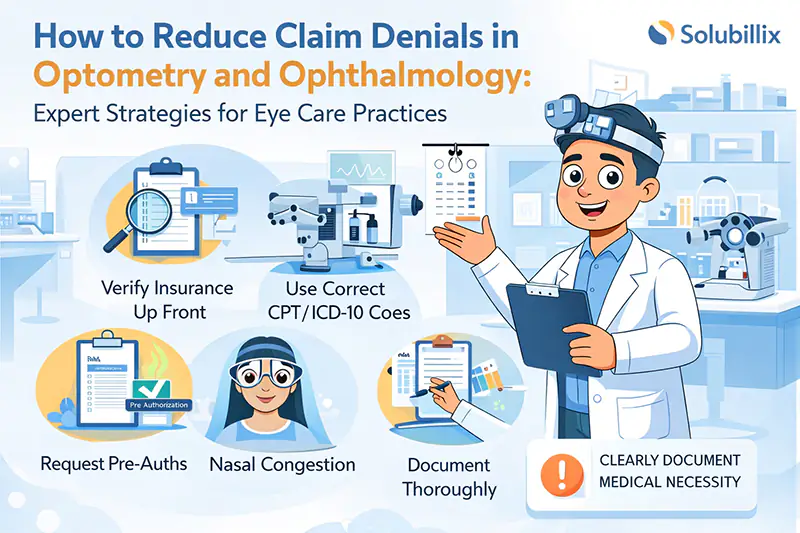
Claim denials are one of the most frustrating challenges for optometry and ophthalmology practices. They slow revenue flow, increase administrative workload, and can impact the financial health of your clinic. Understanding why claims are denied and implementing effective strategies to prevent them is essential for maximizing reimbursement and streamlining your revenue cycle.
At Solubillix, we specialize in helping eye care providers reduce claim denials, optimize billing processes, and improve overall revenue performance. In this guide, we share proven strategies that can help optometry and ophthalmology practices minimize claim denials while maintaining compliance with payer rules.
Why Claim Denials Happen in Eye Care Practices
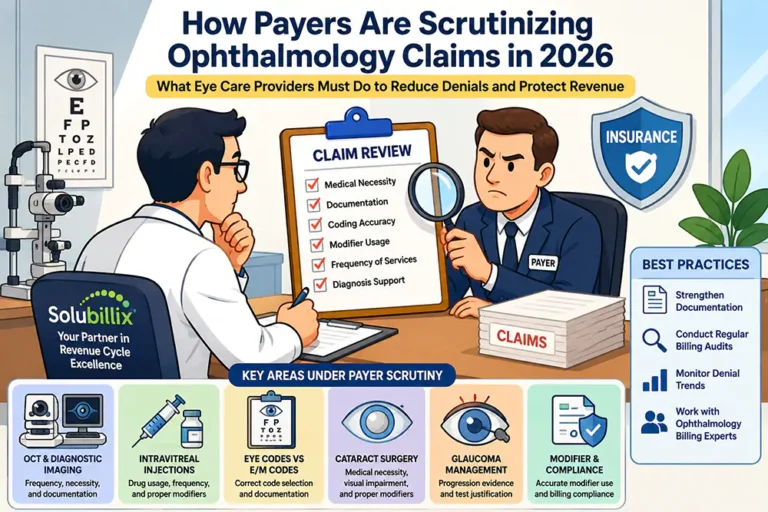
Understanding the root causes of claim denials is the first step in preventing them. In optometry and ophthalmology, common reasons for claim denials include:
- Incorrect or Incomplete Coding
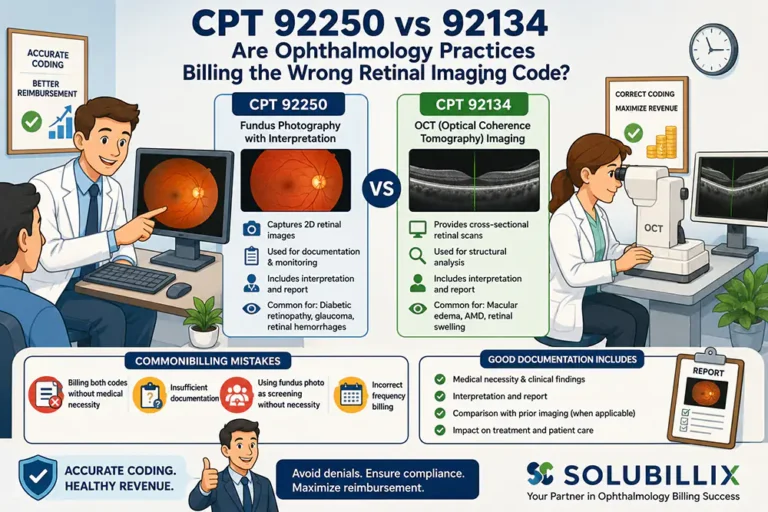
Using the wrong CPT, ICD-10, or HCPCS code is a frequent cause of claim rejections. For example, misreporting OCT, cataract surgery, or glaucoma codes can lead to denials. - Missing or Inaccurate Documentation
Payers require detailed documentation showing medical necessity. Claims submitted without proper clinical notes or supporting evidence are often denied. - Insurance Eligibility Issues
Claims may be denied if the patient’s insurance coverage is inactive, outdated, or lacks coverage for the specific procedure. - Duplicate Claims or Services
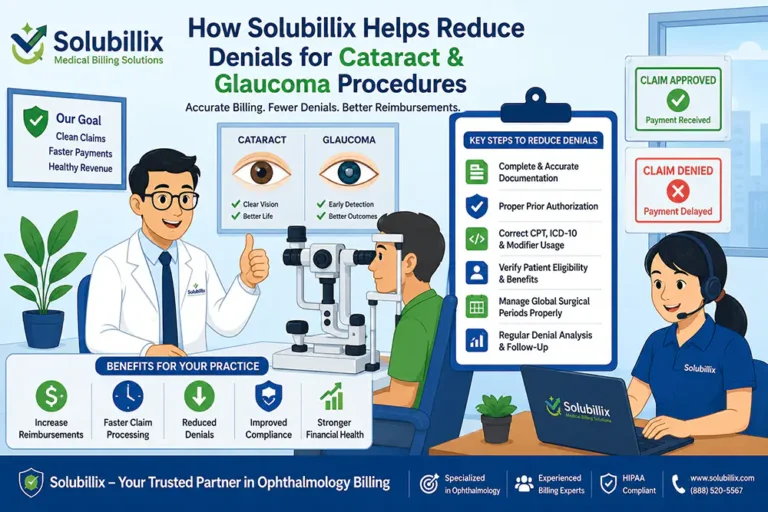
Submitting the same service multiple times without proper justification or modifier use can trigger denials. - Failure to Obtain Prior Authorization
Certain procedures such as intravitreal injections, retina surgeries, or advanced imaging may require prior authorization. Missing this step often results in denials.
The Financial Impact of Claim Denials
Claim denials can have a significant financial impact on eye care practices:
- Reduced cash flow and delayed reimbursements
- Increased administrative workload due to resubmissions and appeals
- Frustration for staff and patients
- Potential risk of audit or compliance issues
Reducing claim denials not only improves revenue but also enhances patient satisfaction and practice efficiency.
Proven Strategies to Reduce Claim Denials
1. Verify Insurance Eligibility Before the Visit
Checking patient insurance coverage in advance ensures procedures and services are covered and helps identify:
- Coverage limitations for routine vs medical services
- Deductible and copay requirements
- Prior authorization needs
Pro Tip: Solubillix provides automated eligibility verification that flags coverage issues before the patient appointment.
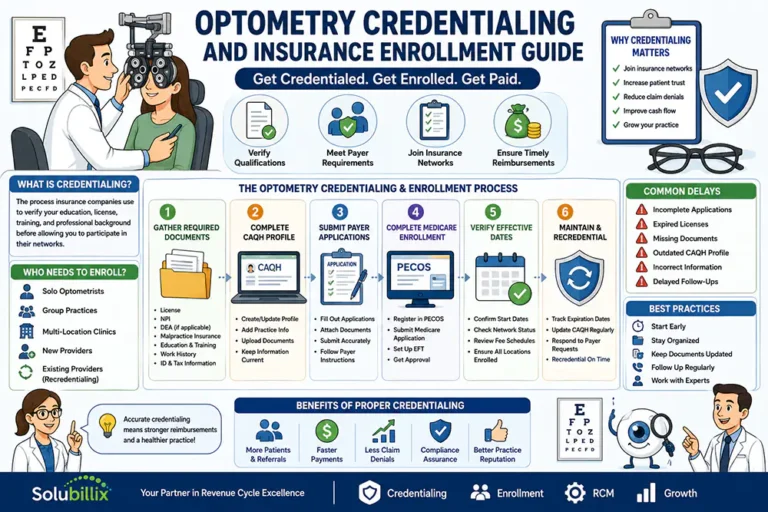
2. Use Accurate CPT and ICD-10 Codes
Correct coding is critical for avoiding denials. Practices should:
- Stay updated on the latest CPT and ICD-10 codes
- Ensure coding matches the service provided and the documented diagnosis
- Use modifiers (e.g., 25, 59, RT/LT) when required
Solubillix expertise: Our coding specialists help ophthalmology and optometry practices ensure proper coding for every procedure, from OCT scans to retina surgeries.
3. Maintain Comprehensive Documentation
Documentation should clearly justify medical necessity and support all billed procedures. Key elements include:
- Patient history and clinical findings
- Diagnosis codes that match the procedures
- Procedure details, results, and follow-up plan
Strong documentation reduces disputes with payers and strengthens claims during audits.
4. Streamline Prior Authorization
Some advanced eye care procedures require pre-authorization. Streamlining this process can:
- Prevent claim denials due to missing authorizations
- Reduce administrative burden on staff
- Ensure timely treatment for patients
Solubillix advantage: We handle prior authorizations for complex procedures, ensuring approvals are in place before services are rendered.
5. Implement Denial Management and Analytics
Tracking and analyzing denied claims helps identify trends and prevent future errors. Practices should:
- Maintain a denial tracking system
- Analyze patterns by payer, procedure, or coding errors
- Implement corrective measures and staff training
Solubillix offers: Denial analytics and reporting to pinpoint issues and optimize your billing workflow.
6. Train Staff Regularly
Staff education on coding, documentation, and payer requirements is essential. Regular training ensures:
- Accurate claims submissions
- Proper use of modifiers
- Understanding of payer-specific policies
Well-trained staff are your first line of defense against claim denials.
7. Outsource Billing to Experts
Outsourcing billing to a specialized provider can significantly reduce denials. Expert billing teams:
- Submit accurate claims the first time
- Handle resubmissions and appeals efficiently
- Ensure compliance with payer and regulatory rules
Solubillix difference: We provide end-to-end billing solutions for optometry and ophthalmology practices, helping eye care providers focus on patient care while maximizing reimbursements.
Final Thoughts
Claim denials are a significant challenge in eye care billing, but they are preventable with the right strategies. Accurate coding, proper documentation, eligibility verification, prior authorization, and denial management are all essential components of a successful revenue cycle.
By implementing these strategies or partnering with Solubillix, optometry and ophthalmology practices can:
- Minimize denied claims
- Accelerate reimbursements
- Improve cash flow
- Focus on delivering high-quality patient care
Solubillix is committed to helping eye care providers reduce claim denials and optimize their billing workflow with specialized expertise in ophthalmology and optometry revenue cycle management.