

A Complete Revenue Recovery Guide by Solubillix
Insurance denials are one of the biggest revenue challenges in ophthalmology practices. From complex surgical billing to strict payer guidelines, even a small mistake can result in delayed or lost payments.
At Solubillix, we help providers turn denials into revenue recovery opportunities. In this step-by-step guide, you’ll learn exactly how to manage, reduce, and prevent insurance denials effectively.
Why Denial Management Is Critical in Ophthalmology
Ophthalmology billing involves:
- High-value procedures (e.g., cataract surgery, retinal treatments)
- Strict documentation requirements
- Frequent payer policy updates
A single denied claim can cost hundreds to thousands of dollars, making denial management essential for financial stability.
Step-by-Step Process to Handle Insurance Denials
Step 1: Identify the Root Cause of Denial
Before taking action, understand why the claim was denied.
Common reasons include:
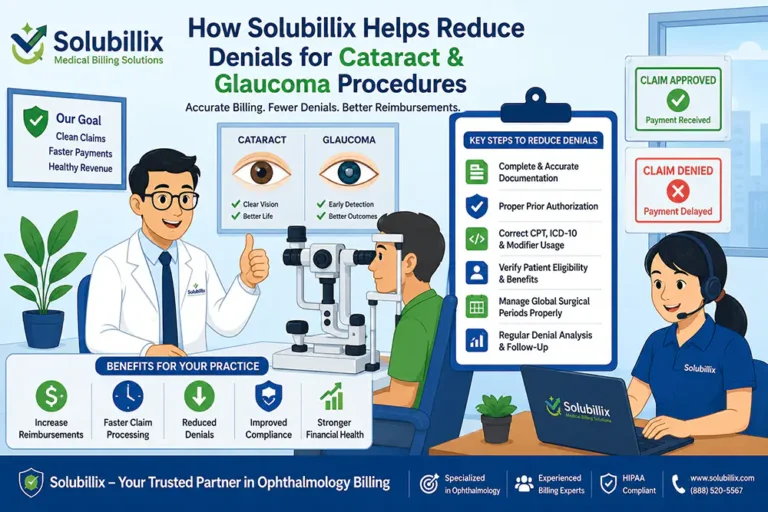
- Incorrect CPT or ICD-10 codes
- Missing or invalid modifiers
- Lack of medical necessity documentation
- Eligibility or authorization issues
- Timely filing limits exceeded
👉 Pro Tip from Solubillix: Always categorize denials to track patterns and recurring issues.
Step 2: Verify Patient & Insurance Information
Many denials happen due to simple front-end errors.
Check:
- Patient demographics
- Insurance eligibility
- Policy coverage details
- Referral or authorization requirements
Fixing these early prevents repeated denials.
Step 3: Review Coding Accuracy
Ophthalmology coding is highly specific.
Focus areas:
- Procedure-to-diagnosis linkage
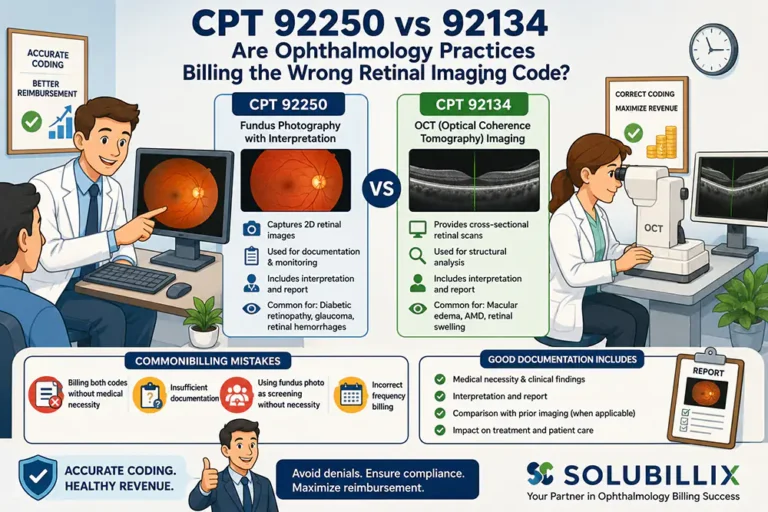
- Proper use of modifiers (e.g., -25, -59, -RT/-LT)
- Global period compliance
- Surgical bundling rules
👉 Incorrect coding = automatic denial in most cases.
Step 4: Correct and Resubmit the Claim
Once errors are identified:
- Make necessary corrections
- Attach supporting documentation
- Resubmit within payer deadlines
Speed matters—delayed resubmissions reduce approval chances.
Step 5: Submit Appeals When Necessary
If a claim is wrongly denied:
Appeal with:
- Detailed explanation letter
- Clinical documentation
- Operative reports (for surgical cases)
- Evidence of medical necessity
👉 Strong appeals significantly increase reimbursement success.
Step 6: Track and Follow Up on Every Denial
Denial management doesn’t end with submission.
You must:
- Monitor claim status
- Follow up with payers
- Escalate unresolved cases
Consistency ensures payments are not lost.
Step 7: Analyze Denial Trends and Prevent Future Issues
The most successful practices don’t just fix denials—they prevent them.
Track:
- Denial rates by payer
- Common coding errors
- Staff performance gaps
👉 Data-driven insights help reduce denials permanently.
Most Common Denials in Ophthalmology Practices
Understanding patterns helps prevent losses:
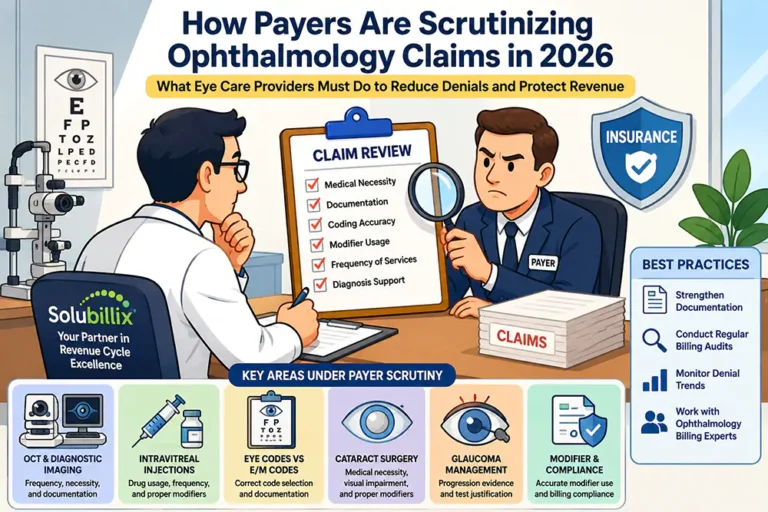
- Cataract surgery documentation errors
- Incorrect use of modifiers
- Unbundling issues
- Lack of medical necessity proof
- Diagnostic test billing errors
- Prior authorization failures
Each of these directly impacts reimbursement rates.
How Solubillix Simplifies Denial Management
At Solubillix, we provide end-to-end denial management solutions tailored for ophthalmology practices.
Our Proven Approach:
1. Denial Prevention System
- Pre-claim audits
- Real-time error detection
- Clean claim submission
2. Expert Appeals Handling
- High-success appeal strategies
- Complete documentation support
- Faster turnaround time
3. Advanced Analytics
- Denial trend reporting
- Revenue leakage identification
- Performance optimization
4. Faster Reimbursements
- Reduced A/R days
- Efficient follow-ups
- Improved cash flow
5. Compliance Assurance
- Up-to-date payer guidelines
- Audit-ready documentation
- Risk reduction strategies
Benefits of Effective Denial Management
When handled correctly, denial management leads to:
- Higher revenue recovery rates
- Reduced claim denials
- Improved operational efficiency
- Better financial stability
- Enhanced provider focus on patient care
Why Ophthalmology Practices Choose Solubillix
Solubillix is more than a billing company—we are your revenue cycle partner.
We combine:
- Specialized ophthalmology billing expertise
- Proven denial management strategies
- Provider-focused solutions
👉 Our mission: Maximize reimbursements while minimizing administrative stress
Final Thoughts
Insurance denials are not just setbacks—they are recoverable revenue opportunities when handled correctly.
By following a structured, step-by-step approach and partnering with experts like Solubillix, ophthalmology practices can:
✔ Reduce denials
✔ Recover lost revenue
✔ Strengthen financial performance
🚀 Ready to Reduce Denials and Boost Revenue?
Let Solubillix handle your denial management while you focus on delivering exceptional patient care