
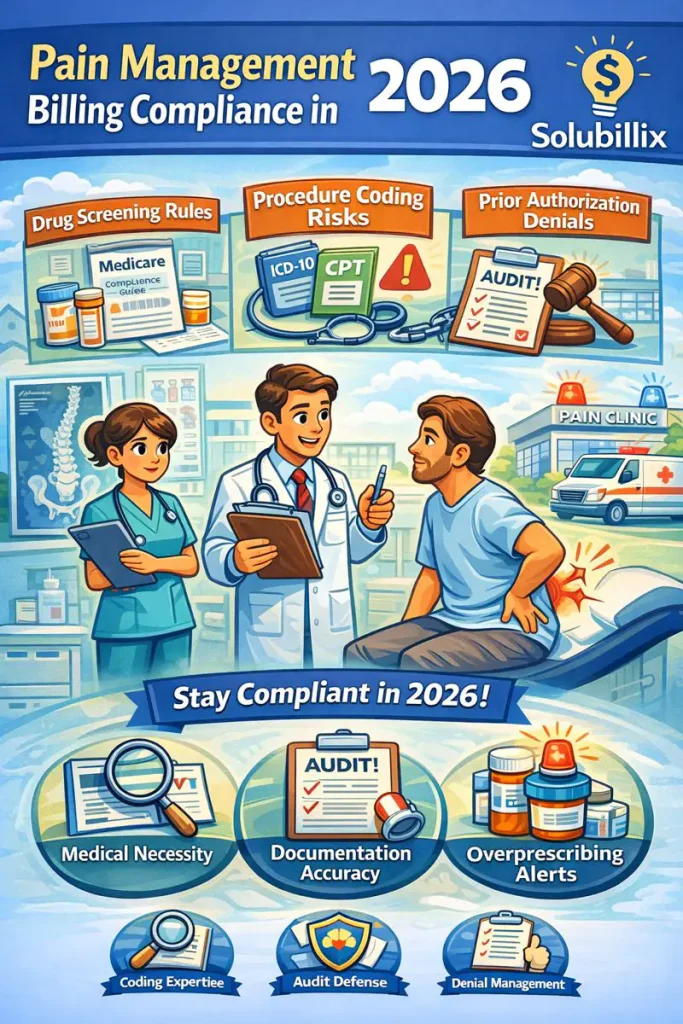
Pain management practices face some of the highest audit risk in healthcare billing, and in 2026, payer scrutiny is only increasing. Strict opioid regulations, advanced utilization review, and tighter documentation requirements mean that even small billing mistakes can trigger denials, recoupments, or audits.
At Solubillix, we work with pain management providers to help them stay compliant, reduce payer risk, and protect revenue. This guide explains the most important pain management billing compliance updates for 2026 and how practices can stay ahead.
Why Pain Management Billing Is High-Risk in 2026
Pain management services sit at the intersection of:
- Controlled substance regulations
- High-cost procedures and injections
- Frequent prior authorization requirements
- Increased OIG and payer oversight
Commercial payers and Medicare are using advanced analytics and AI-driven audits to flag patterns such as overutilization, modifier misuse, and insufficient documentation.
➡️ Solubillix Revenue Cycle Management Services help practices identify compliance gaps before claims are submitted.
Key Compliance Areas for Pain Management Billing
1. Documentation Must Fully Support Medical Necessity
In 2026, payers expect detailed documentation that clearly supports:
- The patient’s pain diagnosis
- Failed conservative treatments
- Functional limitations
- Ongoing treatment plans
Templates that lack individualized details are a common audit trigger.
➡️ Solubillix Medical Coding & Auditing Services ensure documentation aligns with payer expectations.
2. Injection and Procedure Coding Accuracy
Pain management claims are frequently denied due to:
- Incorrect CPT selection for injections
- Unbundling of procedure codes
- Missing or invalid modifiers (such as -50, -59, or RT/LT)
Even minor coding errors can result in recoupments after payment.
➡️ Solubillix Medical Billing Services apply payer-specific coding rules to reduce risk.
3. Opioid-Related Billing Compliance
Payers closely monitor opioid prescribing and related services in 2026. Red flags include:
- High-frequency visits without documented improvement
- Lack of risk assessments or treatment agreements
- Inconsistent diagnosis-to-prescription relationships
Accurate coding and thorough documentation are critical to avoid investigations.
➡️ Solubillix Compliance-Focused RCM Support helps practices meet opioid-related billing standards.
4. Prior Authorization and Frequency Limits
Many pain management procedures now require:
- Prior authorization
- Strict frequency limitations
- Clear documentation of clinical necessity
Claims submitted without matching authorization details are often denied or recouped later.
➡️ Solubillix Authorization and Denial Management Services help prevent avoidable revenue loss.
5. Modifier Usage and Audit Risk
Modifiers remain one of the most audited areas in pain management billing. In 2026, payers closely review:
- Modifier -25 on E/M services
- Modifier -59 for distinct procedures
- Bilateral and anatomical modifiers
Improper modifier usage can trigger audits even if the service was medically appropriate.
➡️ Solubillix Coding Audit Services reduce modifier-related compliance risks.
How Solubillix Supports Pain Management Practices
Solubillix takes a proactive compliance-first approach to pain management billing:
- Specialty-specific coding and documentation reviews
- Payer rule monitoring and updates
- Front-end claim scrubbing
- Fast resolution of denials and audit requests
Our goal is to help pain management practices remain compliant while maintaining consistent cash flow.
Final Thoughts
Pain management billing compliance in 2026 requires more than basic billing knowledge. Providers must align documentation, coding, and payer rules to avoid denials and audits.
Partnering with Solubillix, a trusted medical billing and revenue cycle management partner, helps pain management practices stay compliant, reduce audit exposure, and focus on patient care.
Need help with pain management billing compliance?
Discover how Solubillix Medical Billing, Coding, and Denial Management Services can support your practice in 2026 and beyond.