
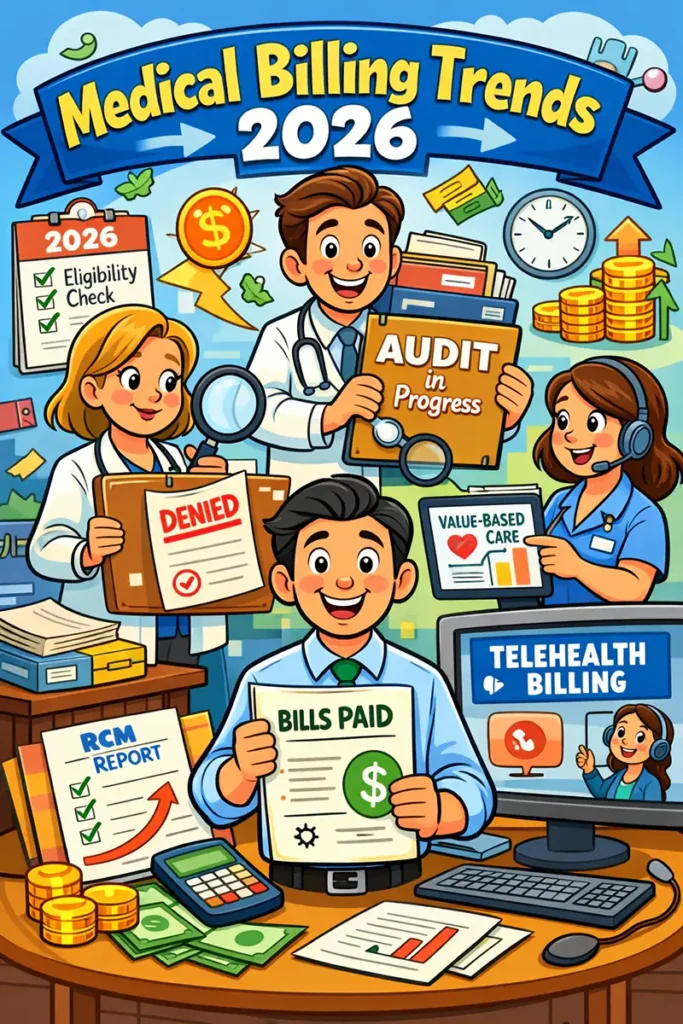
The behavioral health industry is evolving rapidly, and with that evolution comes a new era of billing compliance. By 2026, psychiatry and therapy practices in the US will face stricter audits, tighter telehealth regulations, and higher payer scrutiny. Practices that fail to adapt risk claim denials, delayed payments, and even recoupments from Medicare, Medicaid, or commercial payers.
At Solubillix, we understand the unique challenges behavioral health providers face. Our human-led, proactive billing compliance solutions help psychiatry and therapy practices stay compliant, optimize revenue, and reduce administrative burden, so providers can focus on delivering high-quality care.
Why Billing Compliance Matters More Than Ever in 2026
Behavioral health providers often face complex billing scenarios due to the nature of their services. Unlike standard medical claims, psychiatry and therapy billing involves:
- Time-based CPT codes that depend on session length
- Multiple telehealth modalities with payer-specific requirements
- Ongoing treatment plans that span weeks or months
- High scrutiny from both government and commercial payers
In 2026, non-compliance doesn’t just result in delayed payments—it can threaten your practice’s financial stability and reputation. Payers now evaluate claims not just individually but as patterns over time, meaning even minor errors repeated frequently can trigger audits or recoupments.
Key Changes in Billing Compliance for 2026
1. Payers Are Reviewing Billing Patterns, Not Just Individual Claims
In previous years, payers focused on isolated claim errors. In 2026, compliance reviews have shifted to behavioral patterns:
- Are therapy sessions scheduled too frequently per diagnosis?
- Are the same CPT codes used repeatedly without justification?
- What is the ratio of telehealth to in-person visits?
- Are treatment episodes exceeding typical durations without documented progress?
Even if each claim is technically correct, irregular patterns may trigger an audit or denial.
Customer-focused benefit: Solubillix monitors your billing patterns proactively, so potential audit triggers are addressed before payers flag them.
2. Clinical Documentation Must Demonstrate Progress and Clinical Decision-Making
Progress notes alone no longer satisfy payers. Compliance now requires evidence of active clinical decision-making:
- Updated treatment goals: Are the goals evolving based on patient response?
- Progress documentation: Do notes reflect meaningful improvement or changes in strategy?
- Clinical justification for continued care: Does each session align with the overall treatment plan?
Why it matters: Payers deny claims if documentation appears generic, repetitive, or copied forward.
Solubillix solution: We review and guide documentation practices to ensure each claim reflects real clinical value, reducing the risk of denials or audits.
3. Telehealth Compliance Is More Critical Than Ever
Tele-mental health has become a cornerstone of behavioral health delivery. However, US payers are cracking down on telehealth compliance:
- Patient location verification: Services must align with payer regulations in the patient’s state
- Provider licensure: Providers must be fully licensed to practice in the patient’s location
- Correct use of CPT codes and modifiers: Essential for accurate reimbursement
- Place-of-service coding: Must match payer rules and session type
Solubillix ensures telehealth billing accuracy by keeping your team updated on evolving state and federal regulations, reducing denials and payment delays.
4. Credentialing, Supervision, and Scope-of-Practice Are Under Increased Scrutiny
Billing errors often occur when supervision rules, credentialing status, or scope-of-practice limitations are overlooked:
- Claims submitted before provider credentialing approval can be denied
- Supervising provider requirements for therapy services must be clearly documented
- Providers must bill within payer-recognized scopes of practice
Solubillix actively tracks credentialing and supervision compliance, protecting your practice from denials and recoupments.
5. Frequency and Utilization Monitoring is Essential
Payers now evaluate service utilization trends:
- Excessive visits per patient without documented progress can trigger audits
- Long-term therapy plans must include updates and treatment adjustments
- High telehealth usage ratios may prompt payer review
How Solubillix helps: We analyze your service utilization data, identify potential audit risks, and implement corrective strategies before they impact your revenue.
Common Billing Compliance Mistakes Solubillix Helps Avoid
Behavioral health practices often encounter recurring compliance issues:
- Outdated or incorrect diagnosis codes
- Generic progress notes without clinical justification
- Telehealth billing errors (wrong modifiers, POS codes, or licensure issues)
- Billing services outside the provider’s scope-of-practice
- Missed documentation for supervision or group therapy requirements
Solubillix addresses these proactively so your practice can focus on patient care instead of chasing denials.
How Solubillix Supports US Psychiatry & Therapy Practices
We provide human-led, proactive compliance services that include:
- Billing pattern monitoring: Identify red flags before payers do
- Documentation alignment: Ensure CPT codes reflect clinical intent
- Telehealth verification: Confirm compliance with state and federal rules
- Credentialing oversight: Track and maintain credentialing for all providers
- Revenue optimization: Reduce denials, maximize payments, and prevent revenue loss
By partnering with Solubillix, your practice reduces administrative burden, stays audit-ready, and protects revenue.
Why Compliance Strategy Matters More Than Ever in 2026
Non-compliance can result in:
- Delayed or denied payments
- Costly recoupments from Medicare, Medicaid, or commercial payers
- Strained payer relationships
- Potential legal or regulatory consequences
Proactive billing compliance is no longer optional. Practices that implement structured, human-led workflows are better positioned for growth, stability, and long-term profitability.
Customer-Focused Benefits of Solubillix Compliance Services
- Peace of mind: Know your practice is audit-ready and compliant
- Financial stability: Minimize denials and recoupments
- Time savings: Reduce administrative burden on your team
- Revenue growth: Maximize reimbursement with accurate billing
- Patient focus: Allow providers to concentrate on care instead of paperwork
Final Thoughts
Billing compliance for US psychiatry and therapy practices in 2026 requires accuracy, consistency, and a proactive approach. By addressing evolving payer rules, telehealth regulations, and documentation standards, providers can secure revenue, maintain compliance, and enhance patient care.
Solubillix offers the expertise and human-driven oversight to keep your practice audit-ready, denial-resistant, and financially secure.
Ready to Protect Your Behavioral Health Revenue in 2026?
📩 Contact Solubillix today for US-focused, compliance-driven behavioral health billing support.
🔍 SEO Keywords Optimized for 2026 Behavioral Health
- US behavioral health billing 2026
- psychiatry billing compliance US
- therapy billing rules US
- telehealth compliance US
- Medicare and Medicaid behavioral health billing
- audit-ready behavioral health billing
- revenue cycle management behavioral health
Copyright Disclaimer for Solubillix Website Footer
© 2025–2026 Solubillix. All content on this website, including blogs, guides, and resources, is original, copyright-free, and created by Solubillix. No portion may be copied, republished, or distributed without express written permission. All content is provided for educational and informational purposes only.