

CPT 92507 billing looks straightforward on the surface. The claim may contain only one treatment code, but that does not mean the billing process is simple. When documentation, diagnosis coding, payer requirements, authorization, or modifiers do not line up, an otherwise legitimate speech-language pathology service can still end up denied or delayed.
For speech-language pathologists (SLPs) and practice managers, the goal is not simply to submit CPT 92507. The goal is to make sure the clinical service, documentation, diagnosis, payer requirements, and claim data all tell the same story.
This guide explains how CPT 92507 is used in 2026, what billing teams should check before submitting a claim, common reasons for denial, Medicare modifier considerations, and the important CPT changes coming January 1, 2027.
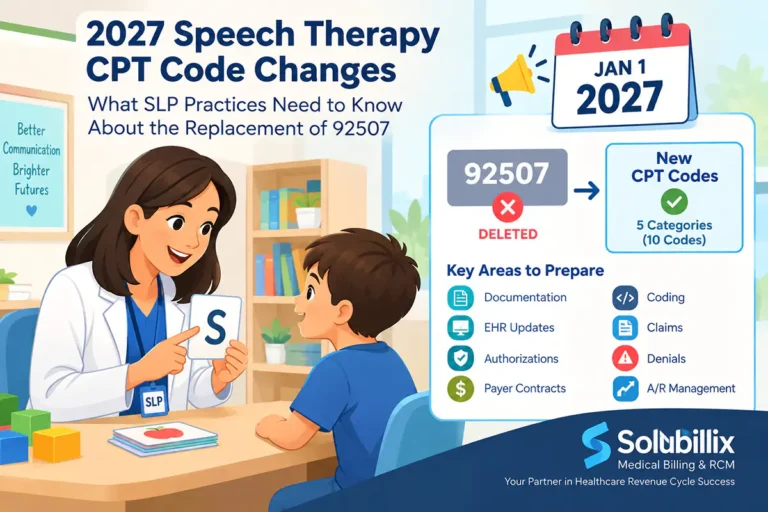
2026 reminder: CPT 92507 remains in effect through December 31, 2026. Beginning January 1, 2027, it will be replaced by a new family of speech-language pathology treatment codes.
What Is CPT 92507?
CPT 92507 is used to report individual treatment for speech, language, voice, communication, and/or auditory processing disorders.
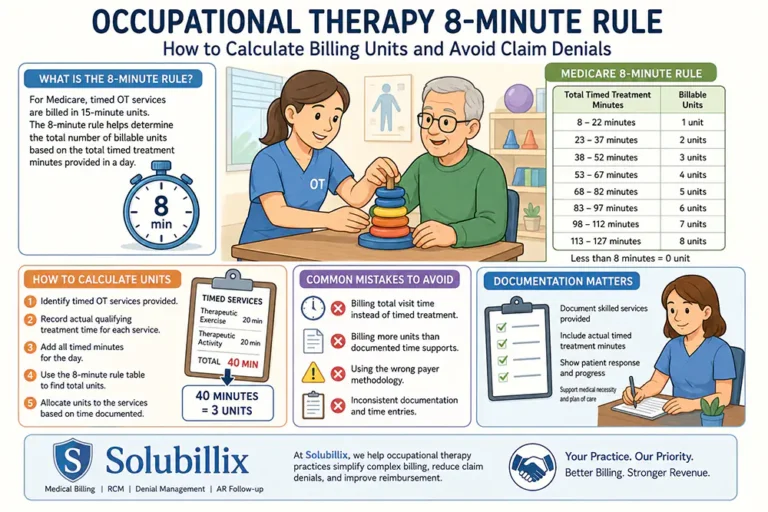
Unlike many therapy codes that are reported based on treatment time, CPT 92507 is an untimed code in 2026. Medicare guidance describes 92507 as a single encounter reported with one unit, regardless of the duration of the service on that day.
That distinction matters.
A billing team should not automatically turn a 60-minute 92507 session into multiple units simply because the session lasted longer. The code’s structure does not work like a typical 15-minute timed therapy code.
A simple example
An SLP provides individual speech-language treatment to a patient and documents the treatment performed during the visit.
If the service is appropriately reported with CPT 92507, the claim generally reflects:
CPT 92507 — 1 unit
The actual clinical documentation should explain what was treated and how the service was provided. The duration can still be clinically important, but it does not automatically create additional 92507 units.
What Should Be Documented for CPT 92507?
One of the most important billing lessons for SLP practices is this:
A diagnosis on the claim does not replace treatment documentation.
The medical record should support why the patient required skilled speech-language pathology treatment and what occurred during the encounter.
Depending on the patient’s condition and payer requirements, documentation should clearly support areas such as:
1. The condition being treated
The record should identify the speech, language, communication, voice, or related disorder being addressed.
The diagnosis reported on the claim should make sense in relation to the treatment being provided.
2. Treatment goals
The record should demonstrate what the clinician is working toward.
For example, documentation might address goals involving:
- expressive language
- receptive language
- articulation
- speech sound production
- fluency
- communication skills
- voice
- auditory processing
- other applicable speech-language treatment goals
The specific goals should reflect the patient’s actual treatment plan rather than generic statements copied from another encounter.
3. What the SLP actually did
This is where vague documentation can become a billing problem.
A note saying only:
“Speech therapy provided. Patient tolerated treatment well.”
does not provide much information about the actual service.
A stronger note explains the intervention performed and connects it to the patient’s treatment goals.
4. Patient response and progress
The record should provide clinically meaningful information about the patient’s response to treatment and, when appropriate, progress toward established goals.
That does not mean every note needs to contain a lengthy narrative.
The important point is that the documentation should demonstrate that the service was actually provided and remains supported by the patient’s clinical needs.
5. Medical necessity
The documentation should support why skilled SLP treatment was reasonable and necessary under the applicable payer’s coverage requirements.
This becomes particularly important when a payer reviews medical records after a denial, audit, or request for additional information.
CPT 92507 Modifiers: What Should Billing Teams Watch?
Modifiers should not be added simply because a billing system allows them.
The correct modifier depends on the payer, provider type, service setting, and circumstances of the claim.
Medicare and the GN Modifier
For Medicare claims, CMS guidance states that modifier GN identifies services delivered personally by a speech-language pathologist or under an outpatient speech-language pathology plan of care.
For practices billing Medicare, the claim should therefore be reviewed to ensure the appropriate therapy modifier is present when required.
This is an important distinction between Medicare billing and commercial payer billing.
Do not assume that a modifier requirement for Medicare automatically applies to every commercial insurer.
Always verify the applicable payer’s billing policy and contract requirements.
What About the KX Modifier?
The KX modifier is different from GN.
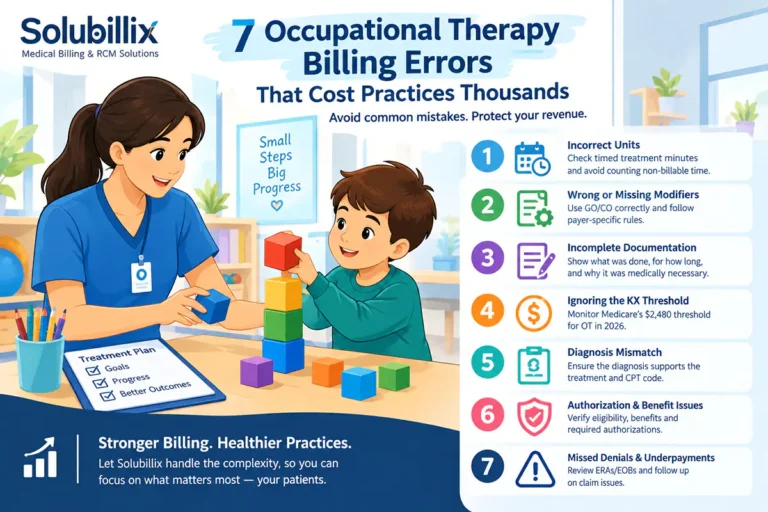
For Medicare outpatient therapy, KX is associated with the annual therapy threshold. For calendar year 2026, the KX threshold is $2,480 for physical therapy and speech-language pathology services combined. There is a separate $2,480 threshold for occupational therapy.
Once applicable services exceed the threshold, Medicare requires the appropriate claims to include KX to indicate that the services remain medically necessary and are supported by the medical record.
CPT 92507 is among the speech therapy services subject to Medicare’s therapy requirements. CMS specifically lists 92507 among speech therapy codes evaluated under its therapy medical-necessity and KX review processes.
Billing takeaway
Do not treat KX as a routine modifier that belongs on every 92507 claim.
Instead, your billing workflow should monitor the patient’s Medicare therapy expenditures and determine when KX requirements apply.
Common CPT 92507 Billing Denials
Most 92507 problems are not caused by the CPT code itself.
The bigger issue is usually a mismatch somewhere else in the claim.
Here are several areas an SLP practice should review when a 92507 claim is denied.
1. Medical Necessity Denial
A payer may determine that the documentation or diagnosis does not sufficiently support the need for the service.
Before appealing, compare:
Diagnosis → treatment plan → intervention → progress → medical necessity
If those pieces do not connect, simply resubmitting the same claim may not solve the problem.
2. Incorrect or Missing Modifier
A claim can be denied when a required modifier is missing or when the wrong therapy modifier is reported.
For Medicare, review whether the applicable GN and, when required, KX requirements have been satisfied.
For commercial payers, check the payer-specific claim instructions rather than assuming Medicare rules apply.
3. Diagnosis Does Not Support the Service
Another common problem is a diagnosis that does not clearly support the treatment being billed.
For example, a claim may contain a broad medical diagnosis while the clinical documentation focuses on a specific communication or speech-language disorder.
That does not automatically mean the claim is incorrect. However, the diagnosis coding should accurately reflect the patient’s documented condition and the applicable payer’s requirements.
ICD-10-CM codes are updated annually, so billing teams should also make sure they are using the current code set. ASHA’s 2026 SLP coding guidance, for example, identifies new and revised diagnosis codes relevant to speech-language pathology.
4. Authorization or Benefit Problems
A clinically appropriate service can still deny because of an administrative coverage issue.
Examples include:
- prior authorization not obtained
- authorization expired
- visits exhausted
- benefit does not cover the service
- incorrect authorization information
- provider not properly linked to the payer
- member eligibility changed
- service excluded under the patient’s plan
This is why eligibility and authorization verification should happen before the claim reaches the billing queue whenever possible.
5. Individual vs. Group Treatment Confusion
CPT 92507 is for individual treatment.
CPT 92508 is associated with group treatment involving two or more individuals. CMS guidance distinguishes individual treatment under 92507 from group treatment under 92508.
If the actual service does not match the code submitted, the claim should be reviewed before billing.
6. Claim Data Does Not Match the Clinical Record
Sometimes the problem is not the CPT or diagnosis at all.
The claim may contain incorrect information such as:
- rendering provider
- billing provider
- NPI
- taxonomy
- place of service
- authorization number
- patient information
- date of service
- payer information
These errors can create avoidable claim rejections or denials.
A good billing process therefore checks the entire claim, not just the CPT code.
CPT 92507 and Place of Service
Place of service should accurately represent where the service occurred.
For example, a service provided in an office setting should not automatically be billed using a telehealth-related place of service simply because the practice occasionally provides virtual visits.
Telehealth rules are particularly payer-specific and can change.
For that reason, SLP practices should verify:
- whether the payer covers the service through telehealth
- whether CPT 92507 is eligible for the specific payer’s telehealth policy
- which place-of-service code is required
- whether a telehealth modifier is required
- whether state-specific requirements apply
- whether authorization is required
Medicare’s telehealth rules have also continued to change, so practices should verify the current CMS requirements before submitting virtual-service claims.
CPT 92507 and the 2027 Code Changes
This is the part of the article that SLP practices should pay particular attention to.
CPT 92507 will not remain the primary individual treatment code after December 31, 2026.
Beginning January 1, 2027, CPT 92507 will be deleted and replaced by 10 new CPT codes designed to describe SLP treatment more specifically by clinical focus and treatment time.
The new structure includes five treatment categories.
| Treatment category | Base code | Add-on code |
| Fluency disorders | 92654 | +92655 |
| Speech sound production disorders | 92656 | +92657 |
| Language comprehension and expression disorders | 92658 | +92659 |
| Combined speech sound production and language disorders | 92660 | +92661 |
| Voice, upper airway dysfunction and/or resonance disorders | 92662 | +92663 |
The base codes describe the initial 30 minutes of direct, one-on-one patient contact, while the corresponding add-on codes report each additional 15 minutes.
That is a major operational change for practices that have historically used 92507 for individual treatment.
Why this matters for your billing department
The transition is not simply a matter of changing one CPT number in the practice management system.
Practices should review:
- EHR templates
- charge capture
- CPT libraries
- billing software
- authorization workflows
- payer fee schedules
- provider contracts
- claim edits
- documentation templates
- staff training
- time-tracking procedures
ASHA recommends that practices prepare clinical, coding, billing, and administrative staff for the transition and verify implementation requirements with individual payers.
Will Every Payer Implement the 2027 Codes the Same Way?
Not necessarily.
The CPT code set establishes the codes, but individual payers may have their own coverage, authorization, reimbursement, and implementation policies.
ASHA specifically advises SLPs to verify requirements with Medicare Advantage, Medicaid, commercial insurers, and other payers before reporting the new codes.
This is particularly important for practices that participate with multiple insurance companies.
A billing department should not assume:
“If Medicare has updated the code, every payer will process it the same way.”
Instead, build a payer-by-payer implementation checklist.
How an SLP Practice Can Prepare for 2027
A practical preparation process could look like this:
Step 1: Review the new code family
Make sure clinicians, coders, billers, and practice managers understand the difference between the five treatment categories.
Step 2: Review documentation
The new codes introduce time-based reporting, so documentation should clearly support the direct treatment time.
Step 3: Update the EHR
Review templates, charge capture, CPT selections, and treatment documentation workflows.
Step 4: Check payer policies
Contact or review payer guidance for:
- effective date
- coverage
- authorization
- reimbursement
- modifier requirements
- claim submission requirements
Step 5: Review contracts
Fee schedules and reimbursement terms should be reviewed before the new codes go live.
Step 6: Test claims
Before January 2027, billing teams should test the new codes through their billing system and clearinghouse where possible.
Step 7: Monitor the first claims
Once the codes become effective, watch the first submitted claims closely.
A denial trend involving one payer can be much easier to correct when identified after the first few claims rather than several months later.
A Practical CPT 92507 Billing Checklist
Before submitting a 92507 claim in 2026, review:
Patient & Coverage
- Patient eligibility verified
- Correct payer selected
- Benefits reviewed
- Authorization verified when required
Clinical Documentation
- Diagnosis documented
- Treatment goals supported
- Intervention documented
- Patient response/progress documented
- Medical necessity supported
Claim
- CPT 92507 correctly selected
- Correct diagnosis linked
- Correct rendering provider
- Correct billing provider/NPI
- Correct place of service
- Required modifier reviewed
- Units reported correctly
- Authorization information included when required
Medicare
- GN requirement reviewed
- KX threshold monitored
- Medical necessity documentation maintained
- Current CMS requirements verified
What Should You Do When CPT 92507 Is Denied?
Do not immediately assume the CPT code was wrong.
Start by identifying the actual denial reason.
For example:
Denial: Medical necessity
Review the clinical record and diagnosis support.
Denial: Missing modifier
Check the payer’s claim requirements and the provider’s Medicare/commercial billing status.
Denial: Authorization
Compare the authorization with the date of service, provider, CPT, and number of approved visits.
Denial: Benefit limitation
Confirm the patient’s benefit history and whether the payer considers the service covered.
Denial: Coding issue
Review CPT, ICD-10-CM, modifiers, provider information, and claim edits.
The appeal or corrected claim should address the specific reason for denial. Sending the same claim again without correcting the underlying problem usually does not create a meaningful solution.
How Solubillix Supports Speech-Language Pathology Billing
Speech-language pathology billing requires more than entering CPT codes and sending claims.
At Solubillix, our medical billing and revenue cycle approach focuses on connecting the clinical side of the practice with the financial side of the claim.
Our RCM support can include:
- Insurance eligibility and benefits verification
- Authorization and referral review
- Claims submission
- Claim status follow-up
- Payment posting
- ERA/EOB review
- Denial management
- Corrected claims
- Appeals and reconsiderations
- Accounts receivable follow-up
- Patient balance support
- Payer issue research
- Revenue-cycle reporting
For SLP practices, that means the billing team can look beyond the CPT code and investigate why a claim was rejected, denied, underpaid, or left unresolved.
As the 2027 CPT changes approach, practices should also review how the transition could affect their EHR, authorizations, payer contracts, fee schedules, documentation, and claim workflows.
Solubillix can help practices organize that billing workflow so clinicians can spend more time focused on patient care and less time chasing unresolved claims.
Final Takeaway
CPT 92507 is still an important code for individual speech-language pathology treatment in 2026, but practices should not treat it as a simple “one code and submit” situation.
The strongest billing process starts with the clinical record and carries that information consistently through diagnosis coding, authorization, claim submission, payment posting, and denial follow-up.
And there is another reason for SLP practices to review their billing workflow now:
January 1, 2027 will bring a significant change to individual SLP treatment coding.
CPT 92507 will be replaced by a new, more specific family of timed treatment codes. Preparing early gives billing and clinical teams time to update systems, review payer requirements, train staff, and identify workflow problems before the transition takes effect.
Solubillix — Maximize Collections. Minimize Denials. Partner with Solubillix.
Frequently Asked Questions
Is CPT 92507 still valid in 2026?
Yes. CPT 92507 remains in effect through December 31, 2026. The new replacement codes become effective January 1, 2027.
Is CPT 92507 a timed code?
For 2026, CPT 92507 is an untimed treatment code. Medicare guidance indicates that 92507 is reported as one unit for the encounter rather than multiple units based solely on treatment duration.
Does CPT 92507 require the GN modifier?
For applicable Medicare claims, CMS guidance states that modifier GN identifies services delivered personally by an SLP or under an outpatient SLP plan of care. Commercial payer requirements can differ.
When is KX required for CPT 92507?
For Medicare outpatient therapy in 2026, the KX threshold for combined PT and SLP services is $2,480. Applicable claims above the threshold must include KX to support continued medically necessary therapy.
What replaces CPT 92507 in 2027?
Beginning January 1, 2027, 92507 will be replaced by 10 new SLP treatment codes covering five clinical treatment categories, with an initial 30-minute base code and a 15-minute add-on code for each category.
Will commercial insurance companies use the new 2027 codes automatically?
Payer implementation can vary. SLP practices should verify each payer’s coverage, authorization, billing, reimbursement, and implementation requirements.